
Daniel Comboni
Comboni Missionaries
Institutional area
Other links
Newsletter
Ethics, transparency, sustainability and responsibility in the financial management of the Institute

Monday, 2 November 2026
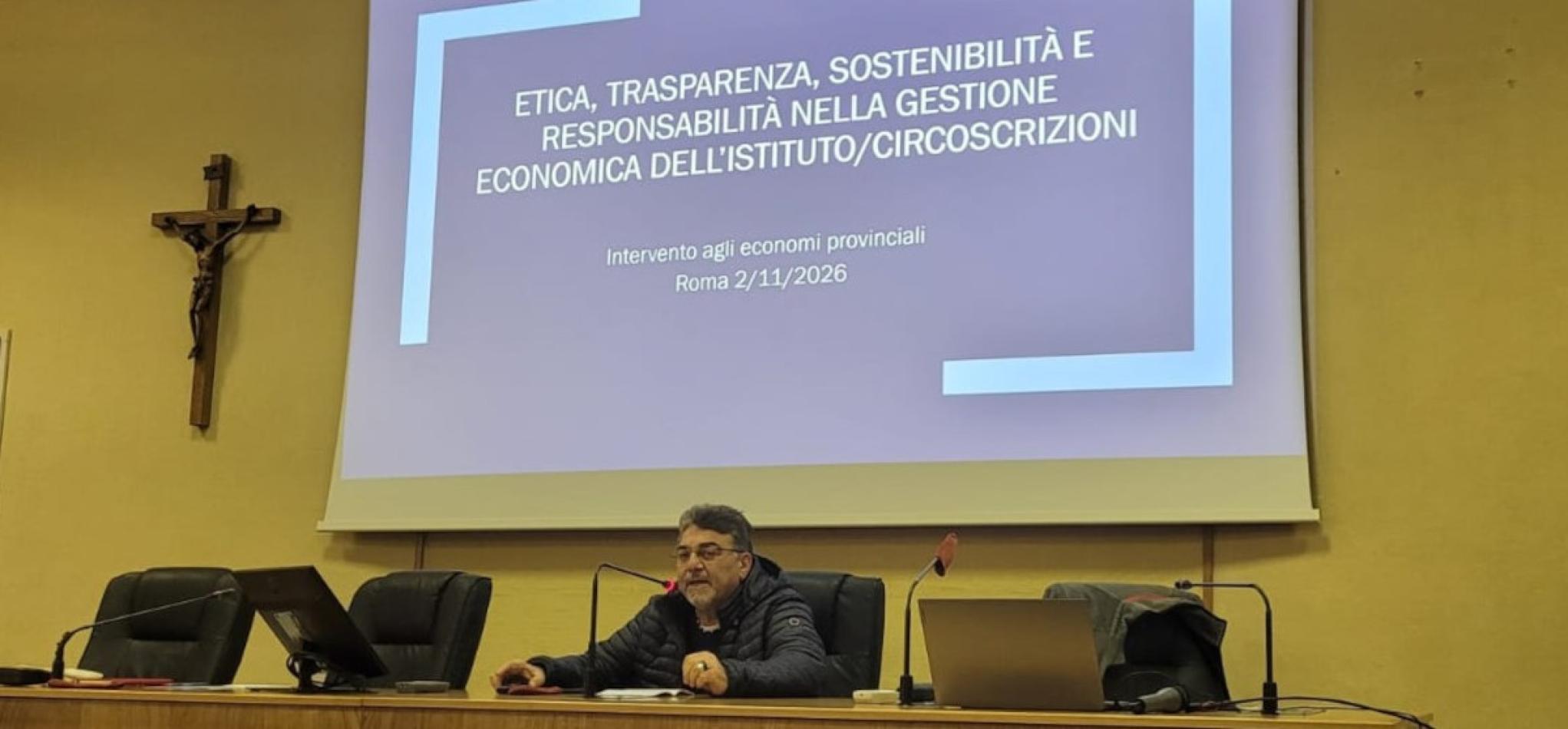
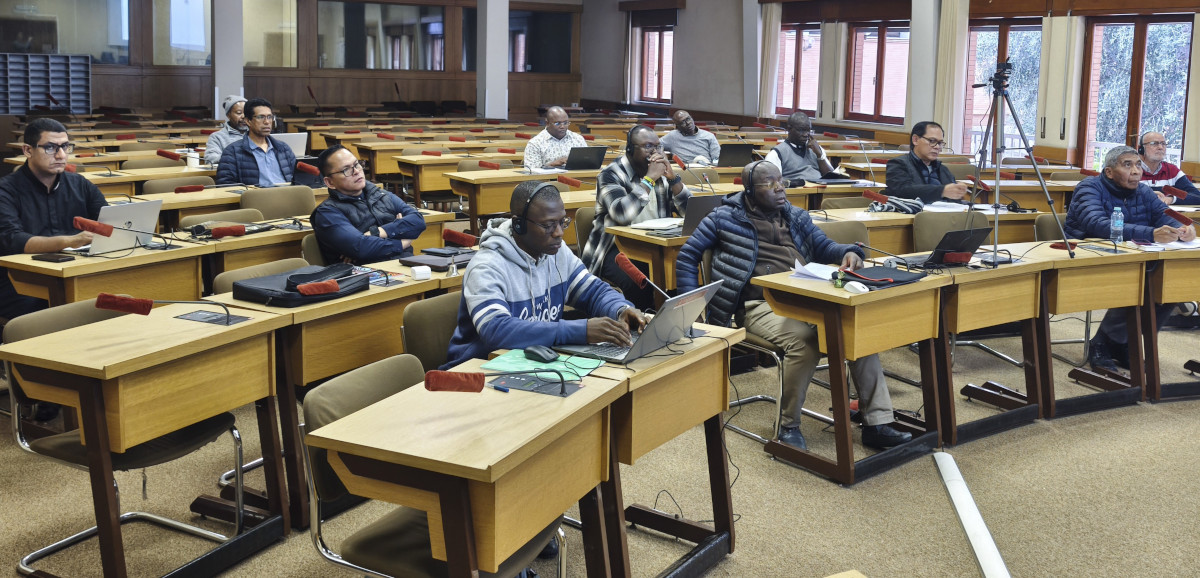
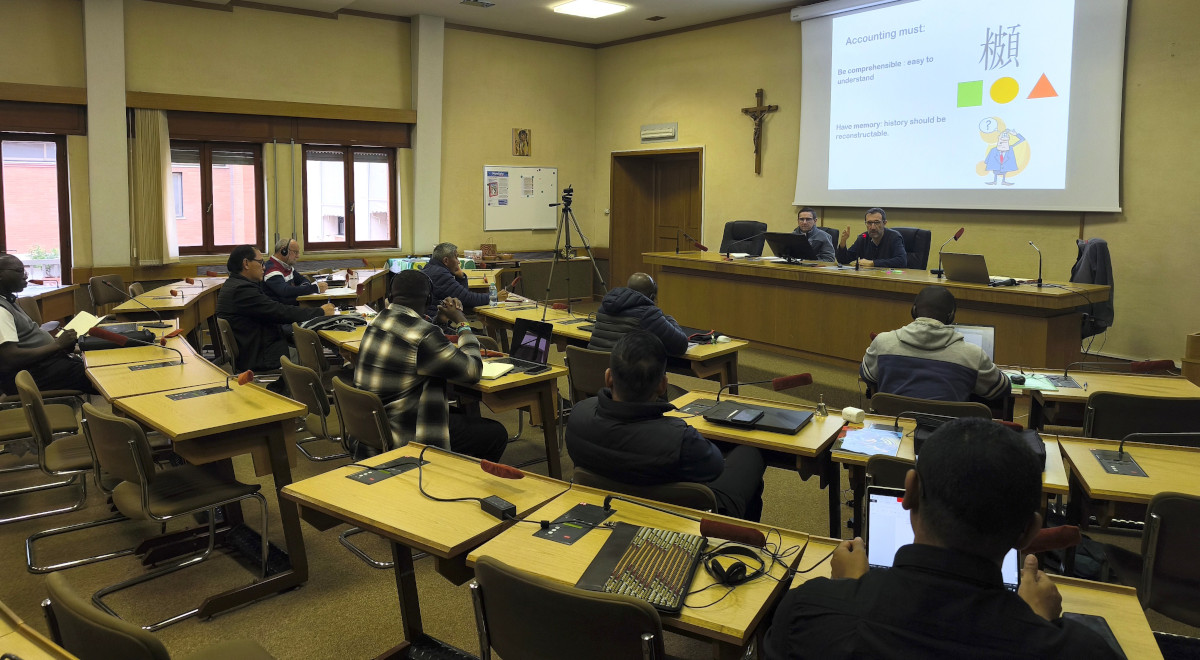
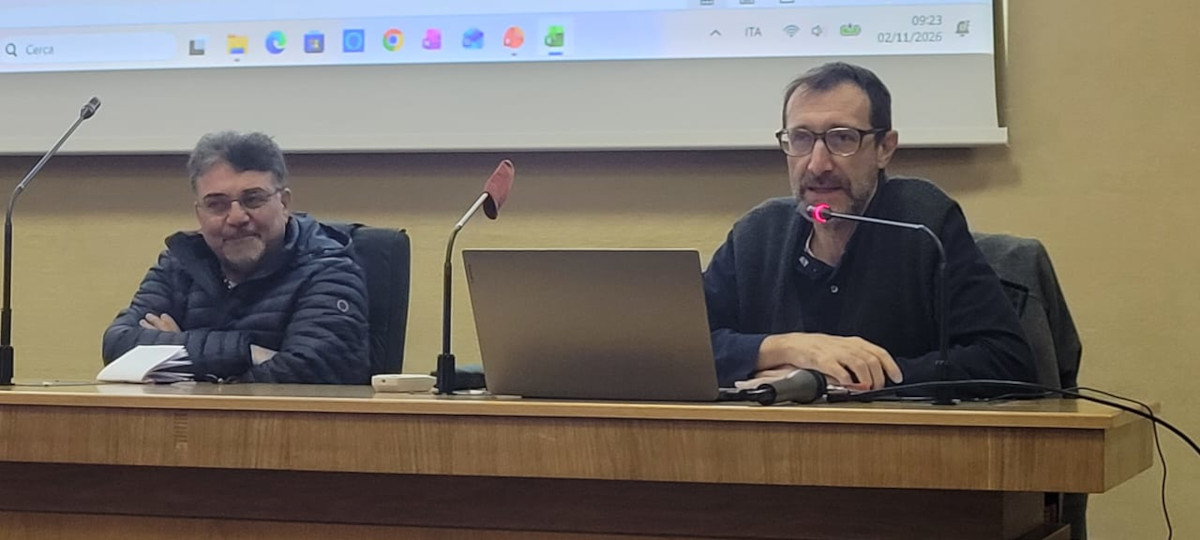
A two-week formation course for bursars from across the Comboni Institute began today at the General House in Rome. The 12 participants represent Comboni communities in Africa, America, Asia and Europe. Led by four members of the General Secretariat for the Economy, the course was opened by Superior General Fr Luigi Codianni, who welcomed the participants and highlighted the essential role of financial management in fulfilling the Institute’s mission.
First of all, I would like to extend a warm welcome to all of you and thank you for being here. I would particularly like to thank each one of you for accepting the service of bursar, a demanding responsibility that requires competence, dedication, precision and a strong sense of responsibility.
Your contribution is invaluable because it helps superiors and their respective Councils make informed decisions, identify priorities and properly administer the assets entrusted to us.
Our meeting is intended not only as an opportunity for technical training and updating, but also as a chance to share a common vision of the role of the bursar and to renew our commitment to ethical, transparent and sustainable management, always in the service of the Institute’s mission.
I would like to begin with a fundamental conviction: the economy is not a dimension separate from the mission of the Institute, but an essential component in its fulfilment.
Financial resources and assets are not ends in themselves, but instruments at the service of the life of the Institute, its communities, formation, pastoral activities and missionary work. They are also the fruit of the generosity and trust of many people. The way we administer them therefore reflects our priorities and our responsibility towards the mission.
The ethical dimension of financial management
Every financial decision must be assessed not only on the basis of its accounting or formal correctness, but also in terms of its necessity, proportionality, sustainability and consistency with the Institute’s priorities.
We are called to avoid arbitrary or personal management of assets, insufficiently justified expenditure, and decisions that fail to comply with established procedures. Particular attention must be paid to potential conflicts of interest, relationships with suppliers and collaborators, and the traceability of transactions.
Proper administration cannot depend solely on individual goodwill; it requires clear criteria, shared procedures and well-defined responsibilities.
As consecrated persons, we are also called to maintain a free, responsible and transparent relationship with material goods, in keeping with the evangelical poverty we profess.
Our credibility also depends on how we manage money and safeguard the assets entrusted to us.
Transparency as an institutional culture
Transparency does not consist merely in presenting accurate financial statements or complying with administrative requirements. It means documenting transactions, making decisions understandable, sharing information and ensuring that financial decisions can be justified and verified.
It is important for every province to have up-to-date information on its financial position and assets, its debts and receivables, its commitments and the sustainability of its ongoing activities.
It is equally important that information circulate regularly and promptly between the bursar, the Provincial Superior, the Council and the competent bodies of the General Government. Incomplete or delayed communication can prevent difficulties from being identified in time and appropriate action from being taken.
Transparency must become a shared culture in which information is reliable, decisions are documented and responsibilities are clearly identifiable.
Economic sustainability: responsibility towards the present and the future
We cannot limit ourselves to checking whether we have the resources needed to support our activities today. We must also ask whether our decisions are sustainable over time and what consequences they may have for the future of our communities and our mission.
Before launching a project or undertaking a new financial commitment, we must consider not only the initial cost but also the running expenses, the resources required to ensure its continuity and its impact on future budgets.
Sustainability does not simply mean spending less or giving up new initiatives. Rather, it means using resources responsibly, establishing priorities and distinguishing between what is necessary and what is merely desirable.
We must also have the courage to recognise when an activity, a facility or an investment is no longer sustainable and needs to be reviewed. Addressing these situations realistically means seeking the best possible conditions for ensuring the continuity of the mission.
In this area, the role of the bursar is fundamental. Through budget analysis, cash flow forecasting and investment assessment, the bursar must help the provincial leadership understand not only what is possible today, but also what can be sustained tomorrow.
Responsible management safeguards the financial conditions necessary to ensure the continuity of the mission into the future.
The role and responsibility of the Provincial Bursar
The Provincial Bursar is not merely the person who records income and expenditure, prepares financial statements or implements the decisions of the circumscription’s leadership. The bursar is called upon to provide a competent assessment of the financial situation, identify problems in a timely manner and contribute to realistic and sustainable decisions.
This requires technical competence, personal integrity, prudence, independent judgement and the ability to engage in dialogue.
The bursar must be able to raise concerns when expenditure is unsustainable, an investment presents excessive risks or a decision requires further examination. The bursar’s responsibility is not to replace the superior or the Council, but to enable them to make informed decisions based on reliable data.
At the same time, the Provincial Superior and the Council must recognise the value of the bursar’s contribution, involving the bursar appropriately in decision-making processes and giving serious consideration to their assessments.
It is therefore necessary to build a collaborative relationship based on trust, clarity of roles and shared responsibility. The bursar must not be left alone to face difficulties, nor regarded as the sole person responsible for the province’s financial management.
Monitoring: preventing, verifying and taking action
Monitoring must become a regular management tool, supporting decisions, verifying their implementation and identifying potential difficulties in a timely manner.
We must move beyond a management approach that intervenes only when problems arise and instead develop the capacity to prevent them through up-to-date data and regular reviews.
This involves reviewing budgets and actual financial statements, analysing variances, monitoring major expenditure items, assessing investments and tracking commitments over the medium and long term. Particular attention must also be given to real estate assets, their preservation and use, and the costs they generate.
Personal integrity alone is not enough. We must strengthen control systems, ensuring that transactions are documented, authorisations are respected and, wherever possible, management and verification are not entrusted to the same person. Periodic controls and independent reviews are also necessary when appropriate.
Any irregularities, incomplete financial reports or unconvincing explanations must not be ignored, but examined promptly, with respect for the people involved and in accordance with institutional procedures.
I would like to reaffirm an essential principle: trust does not exclude control, just as control does not imply a lack of trust.
Every confrere who receives, uses or administers the Institute’s resources must be aware of the duty to account for their use. Personal responsibility cannot be replaced simply by entrusting someone with resources.
Monitoring therefore serves a dual purpose: preventing abuse and irregularities, while also improving resource management and strengthening good administrative practices. For this reason, a regular, complete and timely flow of information between provincial bursars, their respective Councils and the General Council is essential.
The process of restructuring and renewal: turning change into reality
The Institute’s process of restructuring and renewal cannot be regarded as merely an adjustment of administrative procedures or accounting practices. It is a broader process concerning how we understand, administer and make the best use of the resources entrusted to us.
It requires a change in mindset: moving from predominantly reactive management to planned management, from isolated decisions to shared criteria, and from a partial understanding of the financial situation to a comprehensive and realistic view of our resources and commitments.
This involves gaining an accurate understanding of the financial position and assets of each circumscription, assessing the sustainability of activities, identifying priorities and improving the quality of documentation and procedures.
Each circumscription is called upon to translate this process into concrete objectives, clearly assigned responsibilities, implementation timelines and periodic reviews.
The contribution of provincial bursars is decisive. Through your direct knowledge of local situations, you can identify priorities, raise concerns and verify the implementation of decisions.
It is important for each circumscription to be able to present a clear account of the progress made in its restructuring and renewal process, indicating what has been achieved, what remains to be done and which difficulties require the support of the competent bodies.
For its part, the General Council is called upon to accompany this process, provide guidance, promote common criteria and verify the implementation of commitments.
The objective is not to make all contexts identical, but to ensure that each operates according to shared principles of responsibility, transparency, sustainability and proper administration.
From Guidelines to Verifiable Commitments
I would like to conclude by emphasising the need to translate these reflections into concrete commitments. It would be important for each of you to return to your own circumscription with a number of clear priorities:
- Strengthen a culture of integrity and responsibility, ensuring that every transaction is justified, documented and compliant with established procedures.
- Enhance transparency through complete and timely financial reporting and regular communication with the provincial leadership and the competent bodies.
- Make monitoring a regular practice, periodically reviewing the financial position and assets, budget performance and the implementation of decisions.
- Realistically assess economic sustainability, taking into account present and future commitments and the running costs of activities and facilities.
- Continue the process of restructuring and renewal, identifying outstanding priorities and defining the timelines and responsibilities needed to address them.
I would add particular emphasis on the formation of our confreres. Proper administration cannot be entrusted exclusively to the bursar. Every confrere who receives, uses or administers the Institute’s resources must be aware of their own responsibility and their duty to account for how those resources are used.
It is therefore important to promote, together with the provincial superiors, a shared culture of responsibility, supported by clear procedures and appropriate formation.
Finally, it would be useful for each circumscription to identify the main outstanding issues in its restructuring and renewal process and define the necessary actions, establishing appropriate methods and timelines for review.
In this way, our meeting can lead to a concrete process, supported by shared responsibilities and verifiable results.
Thank you all.
Fr. Luigi Codianni, MCCJ
Superior General