
Daniel Comboni
Comboni Missionaries
Institutional area
Other links
Newsletter
In Pace Christi
Laera Giuseppe
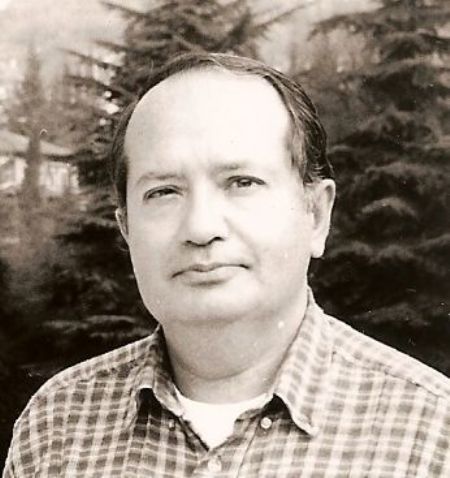
Fr. Giuseppe Laera was born at Castellaneta in the province of Taranto on 13 December, 1937.
He joined the diocesan seminary of Leo XIII at Conversano in Bari province in order to become a diocesan priest. One day he met Fr. Enrico Farè who spoke of the need for missionaries in Africa. Giuseppe applied to enter the novitiate.
Having taken his perpetual vows in 1963, he was sent to Rome to study theology and was awarded a Licentiate in June, 1964. He was ordained priest in Verona by Cardinal Gregory Peter Agajianian on 28 June of the same year and went immediately to teach theology to the students at Venegono (Italy).
After teaching for two years, Fr. Giuseppe succeeded in leaving for Brazil. He was sent to be part of the community of Ecoporanga, a town in the hinterland, in the north-west of the state of Espírito Santo and bordering on the state of Minas Gerais. He was curate there for a year. During that time, besides the difficulties involved in coexisting with the Protestants and religious conflicts, Fr. Giuseppe came to know at first hand the poverty in which the people lived, especially due to the lack of schools and social services. A primary school was built for the education of children in the countryside and a cooperative was started for coffee-growers which had its ups and downs.
After Ecoporanga, Fr. Giuseppe served for a year in the parish of San Mateus and a year at Nova Venécia as curate, up to the end of 1969 when he was sent, as parish priest, to the parish of San Gabriel da Palha, also in the state of Espírito Santo. It was during his stay there that he introduced the practice of paying “tithes” (dízimo): a Biblical form of support for parish works and joyful sharing of one’s goods. Soon, this positive experience was adopted by all the parishes of the diocese of San Mateus and by almost all those of Brazil.
In 1975 Fr. Giuseppe was sent to San José do Rio Claro, in Mato Grosso - a land which originally belonged to the Indios “Paresí, Arino, Beiço-de-pau and Rikbákta” - where there was a Comboni community.
The parish gave birth to thirty rural communities within a radius of hundreds of kilometres from the urban centre. These communities were mostly located in the great “fazendas”. It was in 1972 that San José do Rio Claro began to develop, largely due to the PROBOR (a Plan to stimulate rubber production at the national level). Within ten years it had become a municipal centre.
After Mato Grosso, Fr. Giuseppe was sent to San Paulo for a period of three years (1976-1979), as director of the Sem Fronteiras magazine.
Always on the move, Fr. Giuseppe stayed in many different parishes and Comboni communities: Ibiraçu (Espírito Santo); João Pessoa (Paraiba); Jarú (Rondônia); Porto Velho (Rondônia); the Postulancy of Curitiba (Paraná); the Vocations Centre of Carapina (Espírito Santo); as vocations promoter at Lages (Santa Catarina); and Cacoal (Rondônia) from 2002 al 2004.
After a year of treatment for a tumour in Milan (2004-2005), he was assigned to the Italian province (July, 2005) and he was sent to Lecce community for missionary animation, and later to Messina (2007).
In 2009, Fr. Giuseppe returned to Brazil. He was even able to joke about his illness and would sing a little refrain with these words: “I’ve got cancer and I am happy!” He lived in the community of Guriri (São Mateus) until his death, caused by a sudden heart attack on 26 May, 2010.
His funeral Mass and burial rites took place in the parish of San Daniel Comboni, at Guriri. Some bishops were present, together with the Comboni Missionaries working in Espírito Santo, many diocesan priests and many people from Guriri. He was buried in the cemetery of Nova Venécia (Espírito Santo).
After his death, many people and confreres sent messages of condolence and personal testimonies. The following are just two of them. José Caporalini: “I met Fr. Giuseppe forty years ago. He was always jovial, fraternal and friendly, the fruit of his union with Christ and the poor”. Fr. Adir Loss: “Fr. Giuseppe has been serving the Church in Brazil for forty-four years. He was ‘one who challenged, and an innovator in the pastoral field’. He is greatly missed by those who knew him. He was dedicated to the poor and a faithful witness to the Gospel”.
(Fr. Vincenzo Santangelo)