
Daniel Comboni
Comboni Missionaries
Institutional area
Other links
Newsletter
In Pace Christi
Celadon Giulio
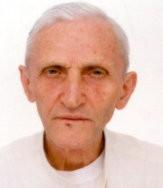
Fr. Giulio was born on 9 January 1935 in Minerbe, in Verona province, into a family marked by work and faith. He did his novitiate in Florence where he took first vows on 9 September 1956, the feast of St Peter Claver. After studying theology in Venegono Inferiore, he took final vows on 9 September 1959 and was ordained priest on 2 April 1960.
His first post was that of formator in the minor seminary of Pellegrina (in Verona province). On 1 July 1961, he was assigned to the community of Pordenone to work in vocations promotion and missionary animation in Friuli-Venezia Giulia. Three years later, the way to the mission opened up and he was sent to Mexico and the mission of San José del Cabo, as curate.
“He was 29 years old when he first came to Mexican California – writes Fr. Rafael G. Ponce in his testimony – never imagining he would spend 47 years in Latin America (Mexico, Ecuador and Colombia) sharing his work equally between vocations promotion, missionary animation and pastoral work among the poor people. In all those years, he never changed his style of evangelical simplicity, with his reserved smile; even though he was one who did not attract attention, he was a man of deep and convinced faith which was at the root of his Comboni missionary and priestly vocation. I knew him when I was a young seminarian and I used to wonder why he always wore the same suit; I later discovered he had chosen to live in radical poverty and had just two suits of clothes of the same colour. This characteristic was in complete harmony with his way of doing vocational promotion: it was totally centred on Christ and on putting the Gospel into practice”.
Mexico was the love of his heart. After a short time, he was sent to the seminary in San Francisco del Rincón, as vocations promoter. He dedicated all his energy to his task up to 1 July 1972 when he was called to Guadalajara as formator in the Comboni seminary. In 1978, his superiors asked him to go to another country and he was sent to Esmeraldas in Ecuador, on the Pacific coast, to serve the parish of Quinindé as curate. The area was in a phase of full social and economic expansion due to the phenomenon of internal migration. With fertile land and abundant forests, it was occupied by groups of people from the various regions of the country, especially the provinces of Pichincha, Manabi and Loja. It was not easy to reach the villages scattered among the forests and along the rivers, or the colonised areas. However, Fr. Giulio was always peaceful and content, generous and available; he did not spare himself and the rural sector received good spiritual care.
In 1982, obedience required that he serve as parish priest in the largest city of Ecuador, Guayaquil, which was also a destination for migrants moving from the countryside to the poor quarters in the periphery. Fr. Giulio was charged with promoting the parish of the Immaculate Heart of Mary in an area “invaded” by so many people who had nowhere to build their homes. It was a moving sight to see poor people setting up a few poles and making a roof and walls of plastic sheeting or bamboo canes, or even some old corrugated iron sheets and making that their home. The problems began with the rainy season when the whole area became a swamp. Many people had to live in flooded homes on some planks hanging from the roof, walking through the water on bricks or stones. Even Fr. Giulio, the living in the Comboni house in Guasmo, a building that also served as a chapel, often had to wear shorts and wade through the pools. With his permanent welcoming smile, he managed to attract people and form a parish community that was active, lively and ready to help. The secret of his success in catechesis was his insistence on the Word of God as a light on the path of daily life.
E would often return late in the evening and have a meal of whatever food was available. He enjoyed his food and never lost his appetite! He was helpful in the community, did the shopping and was also the community bursar.
From 1988 to 1989, he was curate in Esmeraldas, at the parish of San José Obrero and from 1990 to 1993 he was curate in Quinindé. In 1994, he was in Guayaquil, in the headquarters of the Afro-Ecuadorian Centre, where he worked in ministry and missionary animation up to 1998 when he was assigned to the missionary animation centre at Cali, in Colombia.
For some time, he was also in charge of the Shrine of Our Lady of Fatima, next to the Comboni house. In June 2004, he superiors sent him to Aguachica, in the diocese of Ocaña, in Meta Region where the Combonis had recently opened a parish. The social situation of that vast agricultural area was complicated by the presence of the FARC guerrillas who were competing for the control of the territory with paramilitary groups, making life hard for the small farmers and cattle-raisers, as well as for the few industries present. The situation was marked by killings and massacres of peasants, illegal acts and military forces. The work of evangelisation in the midst of such violence was indeed complicated and required sound nerves, prudence and prophecy.
In 2005, Fr. Giulio was called to the postulancy at Medellin, charged with animating a local Church that was rich in priestly and religious vocations but generally inward-looking.
In 2008, he was sent to the provincial seat in Bogotá, for the same ministry. Then, up to 2010, he was based in Cali where he served in pastoral work and missionary animation.
Unfortunately, his strength was failing. Going along with the decision of the Comboni group to leave the city centre, he went to the so-called “red quarter”, due to its poverty and violence dominated by gangs of people involved in illegal drugs.
Every day, Fr. Giulio would take his place in the small square in front of the church, ready to talk to any of the passers-by and listen to them telling him their troubles and mourn for their beloved dead. He had a word of comfort and faith for all of. This was a precious service given by one who had “the odour of the sheep”, as Pope Francis would say. The unhealthy environment gradually weakened his fragile lungs and he did all he could on the spot to look after his health. Reluctantly, in 2012, he had to resign himself to the fact that he needed to return to Italy for good.
Once he settled down, he had no intention of living like a retired person. Appointed to the community of Milan, he worked in missionary animation. In 2015, his health again became precarious and he had to agree to withdraw, as an elderly and sick confrere, to Verona and then to Castel d’Azzano where he spent his time in prayer and listening to the Word. It was there that he was stricken by then coronavirus that caused his death on 16 November 2020.
During one of my visits, when I asked him for the secret of his serenity, he answered: “Trust in the Lord and keep smiling”. He is now in the company of St Daniel Comboni and the many people he met on the missionary journey of his life in Italy, Mexico, Ecuador and Colombia. Passion for the mission was his strength, rooted in the Heart of Jesus and in love for the least in whom he served Jesus himself.