
Daniel Comboni
Comboni Missionaries
Institutional area
Other links
Newsletter
In Pace Christi
Martins Manuel dos Anjos
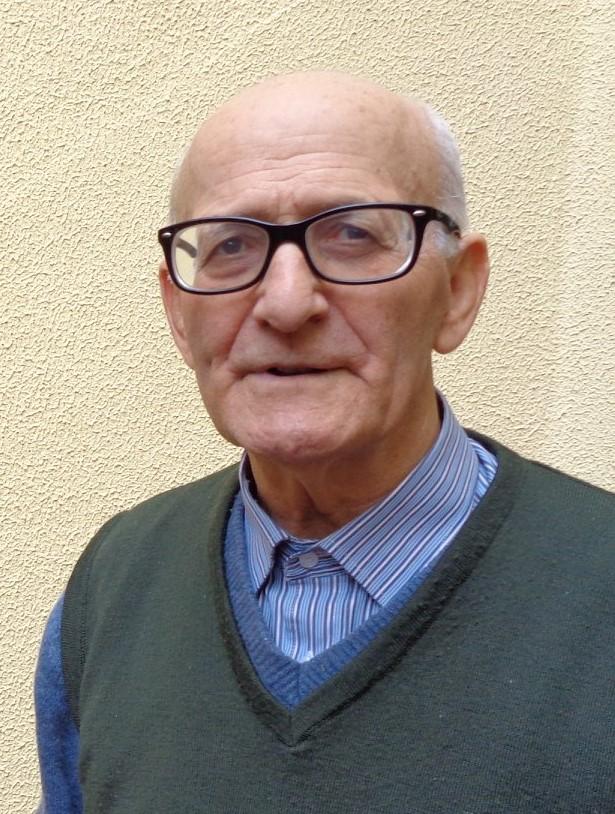
On 27 November we received the news of the death of Fr. Manuel dos Anjos Martins at our house in Tete in Mozambique. It was not entirely unexpected news because we knew that he was seriously ill and that, after a period in the Tete hospital, he had returned home with an ominous diagnosis: an inoperable tumour.
Fr. Manuel dos Anjos was born in Gonçalo Bocas on 1 November 1942; he had just turned eighty. We know little about his childhood. Doubtless, he got to know the Combonis thanks to visits to the parishes and schools by Fr. Dante Greggio and Fr. Rino Carlesi, animators and vocation promoters residing in our seminary in Viseu.
We met for the first time during the summer camp in the seminary of Viseu in 1954 and since then we spent ten years of our formation together: five in the seminary of Viseu, two in the novitiate of Famalicão and three in the philosophical seminary of Maia. Together we came to Italy for theology. He went to Venegono and I to Rome. We met in Viseu for priestly ordination on July 13, 1968, together with five other ordination companions.
From his time in the seminary, I remember his jovial and playful character and a particular propensity for languages that would have marked most of his pastoral and missionary activity.
We were immediately sent to Mozambique and on 13 October 1968, we left together on a TAP plane which took us to Beira, where we were welcomed by Fr. Mário Amaral and Bro. Silvério dos Santos who was in charge of the Inhamízua Teachers Training School. After a few days, I went to Nampula while he went to Tete.
He worked in the missions of Boroma and Marara, in the parish of Matundo and recently in the parish of Chitima.
He spent almost 40 years in Mozambique, in three periods; the first, in Tete (68-73) and two longer periods (81-92) and (98-2022) in Beira and Tete, alternating with two periods in Portugal (74-81) and (92-98), in missionary animation in Aradas, Coimbra and Santarém.
For the newly arrived missionary, the first major task is learning the language and culture of the people among whom he works. Fr. Manuel dos Anjos immediately understood that the theoretical lessons were not enough and that he needed some indispensable tools, a grammar and a dictionary, and here begins the story of the precious legacy that he has left us.
Equipped with a tape recorder and a notebook, he spent many hours of his days talking to people, connecting sounds with objects and recording everything; then at home, he tried to give a minimally intelligible graphic form to the sounds that designated an object, a concept or an idea. Thus, he went on outlining the first rudiments of the phonetics, morphology and syntax of the Chinhungwe language which he went on perfecting and completing until the publication of the first complete grammar which also included a small dictionary of the most used words.
Talking to the people, especially the older ones, Fr. Manuel dos Anjos also collected a great variety of popular proverbs and stories, very useful for understanding the local culture. The complete dictionary was published during his second period at Tete.
With the completion of this work, a door was opened for the preparation of the catechism and for the translation of the essential liturgical texts into the local language. This effort did not have the due support of local leaders and the support and means that various organizations had made available for this purpose were lost. The translation of the Bible into the Chinhungwe language is now well advanced and Fr. Manuel dos Anjos was extremely busy with this task; his death leaves a legacy that we hope someone will continue.
During his stay in the diocese of Beira, he studied the Chindao language of which he published a grammar and a dictionary and also collaborated in the complete translation of the Bible into the same language.
As a missionary, he lived alongside the Mozambican people in the last years of the colonial war, particularly intense in the Tete region, and in the years of the civil war. He had experience of prison in Tete where he remained for more than six months, having for company the Bible - the only book he was allowed to keep - and the daily visits of the confreres who brought him his meals. It was an experience that marked him a lot and he spoke about it reluctantly. The thing that displeased him most was that the bishop of the diocese never went to see him.
His last period in Portugal was been quite long, both due to Covid and the precariousness of his health. But he didn't worry much and was always in a good mood. With the same humility and simplicity with which he had lived, he expressed his wish to be buried in the mission of Chitima, where he spent the last years of his missionary life.
(Fr Manuel Horta, mccj)