
Daniel Comboni
Comboni Missionaries
Institutional area
Other links
Newsletter
In Pace Christi
Lampetti Piero
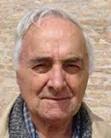
Father Piero Lampetti (21.02.1933 – 12.02.2025)
Piero was born in Villagrande, a hamlet of Mombaroccio (Pesaro), on 21st February 1933. He was the second son of Enrico and Gina Maggioli. After him, three other sons followed; the third was Aldo, born in January 1935. Enrico worked a good piece of the land as a sharecropper, and Gina helped him out. The grandparents also lived in the family: everyone was supported by a strong faith and peace reigned supreme. Piero went to church every morning with his mother for mass. During the summer holidays, he regularly met a boy there, Modesto Generali, who was 5 or 6 years older than him. What struck him deeply was the devotion with which he saw him pray. He learned that he was a seminarian, and he wanted to follow him to the seminary. He told his mother Gina and she went to Modesto’s mother to ask where her son was studying. She answered: “With the Comboni missionaries in Pesaro.” “Pesaro!” replied Gina, “It is not very far from Villagrande.” Modesto’s mother, smiling at her, says: “Today he is close, of course. But when Piero finishes his studies, he will go to Africa and then... he will be very far away indeed.” [Modesto entered the seminary in Riccione at a very young age and was ordained a priest in Milan on 12th June 1954. He immediately left for the missions in Mexico, where he remained for 42 years. He died on 10th January 2024, at the age of 96].
One day, Modesto’s mother, visiting her son in the seminary in Pesaro, spoke to the superior of the community, Father Pizzioli Carlo, about the ‘new vocation’ that had blossomed in Villagrande, and he hurried to visit the Lampetti family, undoubtedly arranging Piero’s entry for the start of the new school year. The third son, Aldo, was also present and dared to intervene: “I want to go to Pesaro with Piero as well.” “So be it!”, a smiling Father Carlo answered.
On the appointed day, the mother and her sons walked the 15 kilometres from Villagrande to Pesaro and presented themselves at Villa Baratoff. They brought with them the letter from their parish priest assuring the superiors of the excellent quality of the ‘new candidates’. In the evening, the two brothers were taken to different dormitories. “But we cannot be apart,” said Aldo decisively. And he explained: “We have a single pair of scissors and a single brush to clean and polish our shoes.” Father Carlo smiled: “An excellent reason! You will sleep in the same dormitory and in neighbouring beds.” In 1945, life was hard in the seminary with little food and a much to learn. The lack of central heating made their hands sore and covered them with chilblains. But the two boys never complained: they learned that to be missionaries, one must not be afraid of sacrifice.
In a few years, Aldo ‘outpaced’ his brother Piero in his studies and became a priest in September 1959. He would occupy important roles both in his mission in Brazil and in the Institute. [He would also be the General Treasurer. Unfortunately, he would precede Piero in death, in São Paulo, Brazil, on 4th May 1993, at only 58 years of age].
After completing his middle school exams in 1948, Piero was assigned to the seminary in Brescia for two years of high school. In October 1951 he went to Florence to begin his novitiate, and, on 9th September 1953, he took his first religious vows. For the three years of high school and his first philosophy studies, he moved to the scholasticate in Verona, at the Mother House. He remained there until June 1956, when he was sent to the apostolic school that the Comboni missionaries ran in Trento as prefect of young students. For four years, he attended theological courses at the diocesan major seminary.
On 9th September 1959, Piero made his perpetual religious profession. On 2nd April 1960, he was ordained a priest in the cathedral of Trent by Archbishop Carlo de Ferrari, a Stigmatine. Immediately afterward, he was sent to Sulmona (L’Aquila) for missionary animation, but also as the community treasurer. Two years later, in June 1962, he left for Uganda. He was 29 years old. He stayed there for 17 years, first in Kitgum (1962-72), in the north, in Gulu diocese, and then in Patongo (1972-79), as parish priest, always among the Acholi ethnic group. Not far away, Dr. Giuseppe Ambrosoli, now a blessed, lived and worked in the Kalongo hospital. Father Piero was his ‘proud’ confessor. Those were terrible years in the African country. In 1971, President Milton Obote was overthrown in a coup led by army chief Idi Amin Dada. The following year, Amin ordered Uganda’s non-citizen Asians – about 60,000 people – to leave the country, and the country’s economy collapsed. In 1972-73, Uganda clashed with Tanzania. Meanwhile, Amin tormented the nation with his tyrannical follies. In 1976, he declared himself president for life. In 1978, Uganda invaded Tanzania, aiming to annex the Kagera region. In response, Tanzania invaded Uganda, uniting the various anti-Amin forces under the Uganda National Liberation Front and forcing Amin to flee abroad. Yusufu Lule was installed as president, but was quickly replaced by Godfrey Binaisa. The country descended into civil war and poverty.
In June 1979, Father Piero returned to Italy for holidays with the intention of staying on for a few years. He spoke about it to Father Salvatore Calvia, Superior General, who sent him an official letter in which he wrote: “The superiors of the Italian province are more than happy to welcome you to their homeland, certain that your presence will be useful for you, for a spiritual and cultural recovery of renewal, but also for our houses in Italy, for your experience and for all that you can give to the benefit of formation and missionary animation. Therefore, I assign you to Italy from 1st March 1980.”
Father Piero was assigned to the community of Pesaro for the ministry of missionary animation. He soon also became superior of the community. He remained there until 1993. During those years, Villa Baratoff ceased to be an ‘apostolic school’ for the formation of future missionaries to become a centre of permanent formation and a meeting place for youth groups and others, of spiritual exercises for the Comboni missionaries and for other social and ecclesial realities of the Marche region.
Once the renovation work was completed, Father Piero moved to Lucca, where he was entrusted with the nearby rectory. He dedicated himself passionately to the ministry and spiritual accompaniment of the people who frequented the Comboni community, which stands out from other parishes for the constant presence of some priests who were always available to listen and welcome those who knocked on the door. Here Father Piero received the news of the death of his brother Aldo.
In March 1995, Father Piero received the letter of assignment to the London Province from the Superior General, Father David Glenday. On 1 July he was already in London, in the house of Dawson Place, in charge of missionary animation. In January 1997, he went to Sunningdale, in the county of Berkshire, again with the same assignment: he celebrates the mission appeals in the parishes, telling of the Comboni mission and sensitising people to collaborate with missionary activities in the world.
In December 2001, he returned to Italy for health reasons. The general administration assigned him to the Italian province on January 1, 2002. Father Piero then returned to his beloved Pesaro, first in convalescence, then as an active member of the local community. He remained there for 20 years, until, in January 2022, he was forced to move to the ‘Fratel Alfredo Fiorini’ Centre in Castel d’Azzano. There he passed away in the Lord on 12th February 2025, surrounded by the affection of his confreres and the care of the medical staff.
During his funeral ceremony, community leader Father Giovanni Munari said: “Father Piero always had fond memories of the confreres and the people he met in Uganda. He candidly confessed that he sometimes had difficulty understanding them, but was quick to add that he had always loved them with all his heart. His face also lit up when he thought back to the many years he spent in Pesaro where he had cultivated relationships and friendships that accompanied him until the end of his life.”
Father Giovanni continues: “What kind of person was Piero? He was not an intellectual, nor did he like great and flowery speeches. Nor was he attracted by beautiful discussions, even those of a theological nature. He went through the phase of the Second Vatican Council in his own way, grasping perhaps its most important aspect, that of a renewal that had to take place first of all in the hearts of people and that consisted in freeing oneself from many frills of the past to give centrality to life and everything that accompanies it [...] Piero stood out for his sweetness, his kindness, his always accommodating and positive character. He loved being with people, especially with his family, with his confreres, nieces, nephews and friends. As a good Pesaro native, he loved the sea, he liked fish, he appreciated good food and being together.”
After thanking the Lampetti family “for having given us Piero and Aldo and for being close to us on many occasions” and, in particular Emanuela, “for how she accompanied her uncle, together with his nephews”, he concludes: “Like a ship that sails the ocean and disappears on the horizon, Father Piero leaves behind him a long luminous trail. It is a trail of gratitude, affection, recognition and nostalgia. But what is life for if not to seek good and spread it generously?”
The relatives wanted Father Piero to be laid to rest in his homeland, the Marches. Therefore, on 21st February (his birthday), in Fano, in the church of San Cristoforo, a requiem Mass was celebrated for him in the presence of some priests, relatives, friends and lay Comboni missionaries from Pesaro and Fano.