
Daniel Comboni
Comboni Missionaries
Institutional area
Other links
Newsletter
In Pace Christi
Benedetti Elio
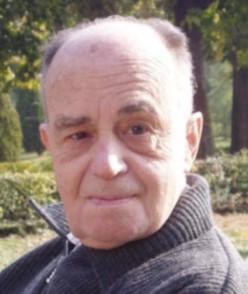
Father Elio Benedetti (27-11-1928 – 21.06.2025)
Elio was born in Teaio, a hamlet of Segonzano (Trento), on 27th November 1928, in a land that during the twentieth century provided the Church with many missionary vocations, including Comboni missionaries. Raised in a large patriarchal family, he found crucial figures in his parents: his father David was a gentle and open man, while his mother Emma was a strong and discreet presence. The first of five children, Elio early on showed religious sensitivity and an irresistible talent for music.
From an early age, he was immersed in a missionary atmosphere thanks to the Comboni missionaries who spent their summers in a rented house belonging to the Benedetti family, next to the sanctuary of the Madonna dell’Aiuto. Elio was literally surrounded by missionaries for several months of the year. It was as if his large family, at a certain point, expanded to become a true Comboni community. As an older man, he would say: “I only have to close my eyes to see myself, still a child, carried on the shoulders of those missionaries, holding on to their generous beards as if they were reins. Perhaps this is why I can’t pinpoint a precise date for my desire to become a priest: my vocation was born in my mother’s womb and very quickly became a call to the mission.”
At eight years old, Elio was already tending the chapel in Teaio and leading the rosary. Meanwhile, his passion for the organ and liturgical chant grew. In 1939, he entered the Comboni Apostolic School in Muralta (Trento) and struggled to adapt to his studies, with a few academic failures and periods of returning to his family, but with one unshakable certainty: “One way or another, I will become a Comboni priest.”
During the war (1938-45), the seminary was moved to Fai della Paganella, where Elio and the other ‘apostolini’ lived alongside the German soldiers and suffered cold and hardship. His brother Fausto was also with him, a precious support during those difficult years. Toward the end of the conflict, while Trento was subjected to heavy bombing, Elio also experi-enced the risks of war, finding himself caught in the crossfire between partisans and retreating German soldiers.
Course of formation – After the war, Elio returned with his classmates to Muralta, amid the rubble of the bombed-out seminary. These were difficult years, but he embraced them with curiosity and an adventurous spirit. An illness brought him back to his family for a short time, before he resumed his education at the Piccolo Seminario in Brescia, where he completed his fourth and fifth year of high school. There, he discovered new creative talents, from electricity to parish festival arrangements. His musical and technical talents increasingly became a tool for service to the community.
His novitiate in Florence – begun in August 1947 – had a profound impact on him: hard work, prayer, study, and above all, music, cultivated with passion and encouraged by his teachers. He devoted himself to Gregorian chant with such dedication that he earned honours in his studies.
On 9th September 1949, he took his first religious vows and transferred to the philosophical scholasticate in Rebbio (Como) for his second and third year of high school. In 1951, he attended his first theology courses in Brescia – always intertwining theology and music – and finally moved to Muralta-Trento, where he served as prefect of young seminarians, while continuing his theology courses at the diocesan higher seminary. At the same time, he completed his music studies at the Bolzano Conservatory, graduating with honours in piano, despite the resistance of his superiors. Convinced that personal listening was more fruitful than sermons, he earned the respect of the students, who saw him as a close and understanding guide. For his final year of theology, he transferred to Venegono Superiore, where he made his final religious profession on 9th September 1955.
On 26th May 1956, he was ordained a priest by Cardinal Giovanni Battisti Montini, the future Paul VI. Soon after, he was appointed vice-rector of the seminary in Trento, where he transformed music into a true pedagogy: he created choirs, composed motets and operettas that expressed the emotions of young people, and participated in important events with his seminarians, even singing in the Church of St. Peter during a national gathering.
In 1962, he transferred to Rebbio, where he led a community of 120 young people. There, too, music became an educational and consoling tool: with empathy and sensitivity, he was able to heal the homesickness and fragility of the youngest children. Meanwhile, he deepened his composition studies with the renowned music teacher Luigi Picchi and closely experienced the discussions of the Second Vatican Council on liturgical music, contributing new compositions himself. He also earned a degree in educational psychology from the Catholic University, further enhancing his role as a formator.
In Mexico – In July 1965, Father Elio left for Mexico. He arrived in New York on the ship ‘Raffaello’ and then, crossing the United States, reached Mexico City. He was immediately assigned to the seminary in San Francisco del Rincón, where he found young seminarians similar to Italian ones in age and moral formation, but immersed in a culture deeply influenced by Mexico’s religious history. The memory of the Cristero War of the 1920s, during which perhaps 100,000 Christians and priests were persecuted and martyred, was still alive. Mexico in the 1960s was a country brimming with priestly vocations: numerous young men chose to become priests, and the atmosphere was permeated with enthusiasm and hope for the future.
Father Elio devoted himself to teaching music. He formed a seminarians’ choir that quickly became known beyond the city, so much so that newspapers nicknamed him “the magician of music”. His concerts even reached the prestigious Teatro de Bellas Artes in Mexico City. Although deeply committed to his musical activity, Father Elio managed all the tasks associated with seminary life: running the financial affairs of the facility, caring for the gardens and animals, and raising funds to support the large community. These commitments, combined with a hectic work schedule, began to take a toll on his physical and psychological well-being, leading him to smoke and visibly lose weight.
Baja California Sur – La Paz – In July 1970, Father Elio was transferred to La Paz, Baja California Sur, where he became rector of the diocesan seminary at the request of Bishop Giovanni Giordani, a Comboni Missionary, the first apostolic prefect of the then-Baja California region. Despite the fatigue accumulated over the previous years, he embraced the new assignment with enthusiasm. The desert climate, the proximity to the Pacific Ocean, and the smaller, more manageable community allowed him to approach his work with greater serenity. He devoted himself to the young seminarians, nurturing both their spiritual and human formation through conferences, daily prayers, sports, and music. At the same time, he ministered in local parishes, meeting with families and actively participating in the life of the Christian communities.
Returning to Italy – FATMO – At the end of 1975, Father Elio had to return to Italy due to physical and nervous exhaustion (now referred to as burnout). Although his health was compromised, his spirit remained intact. After a period of recovery in Pordenone, he devoted himself to mis-sionary outreach, organising meetings and conferences on Comboni missionary activities.
In 1976, he moved to Verona, to the community of the Comboni Multimedia Centre, where he founded Open Window on the Third World (FATMO). This pioneering missionary communication project through free local radio stations allowed him to disseminate news, culture, and music from developing countries, highlighting positive aspects often overlooked by traditional media. He personally built a professional recording studio, overseeing every technical and content detail. FATMO eventually produced over two thousand radio programs, broadcast by three hundred stations throughout Italy.
Trento, Arco, Brescia, Verona and Castel d’Azzano – In July 1987, Father Elio was assigned to the rectory of Trento. He remained there for two years. In July 1989, he moved to the house in Arco di Trento, where he lived peacefully, dedicating himself to writing and poetry. Here, he collected memories, anecdotes, and reflections in a volume entitled Sinfonia di Poemi (Symphony of Poems), a work that bears witness to his intense life and his missionary experiences.
In January 1999, he transferred to Brescia, where he continued to recount, remember, and share his experiences with his confrères. His creative streak and intellectual curiosity never waned, despite his advanced age.
In May 2003, he returned to Verona, to the community for the sick at the ‘Fratel Viviani’ Centre. There he lived peacefully, cultivating affectionate relationships with his family and confrères, and dedicating himself to music and the piano, which became his form of daily prayer and spiritual consolation. His creative energy and gentleness made him a point of reference sought by all.
In June 2015, Father Elio was transferred to the ‘Fr. Alfredo Fiorini’ Centre in Castel d’Azzano, where he calmly faced the challenges of his age and health. He continued to be present and active in the community, maintaining the good humour and generosity that had always distinguished him. He passed away with serene calm and dignity on 21st June 2025, leaving a spiritual, cultural, and missionary legacy that will continue to inspire his family, his confrères, and all who were fortunate enough to know him.
On the afternoon of 24th June, in a radiant summer sunset, his body was returned to the earth and his soul returned to the arms of God the Father. He is now buried in the cemetery that holds the remains of other Comboni missionaries, originally from this Trentino region, so rich in missionary vocations.
Father Donato Benedetti, mccj