
Daniel Comboni
Comboni Missionaries
Institutional area
Other links
Newsletter
Follow the Gold, Disarm the War in Sudan
Tuesday, June 30, 2026
The illegal gold trade is one of the factors fuelling the civil war that has been raging in Sudan for four years. Shedding light on this trade – both legal and illegal – will be a strategy for highlighting the international responsibilities that are fuelling the conflict and demanding that these causes of the war be addressed.
The conflict in Sudan, which began in April 2023 between the Sudanese Armed Forces (SAF) and the Rapid Support Forces (RSF), has caused one of the world’s most severe humanitarian crises. It is estimated that tens of thousands of people have been killed, over 14 million have been forced to flee their homes, and more than half the population is now in need of humanitarian assistance.
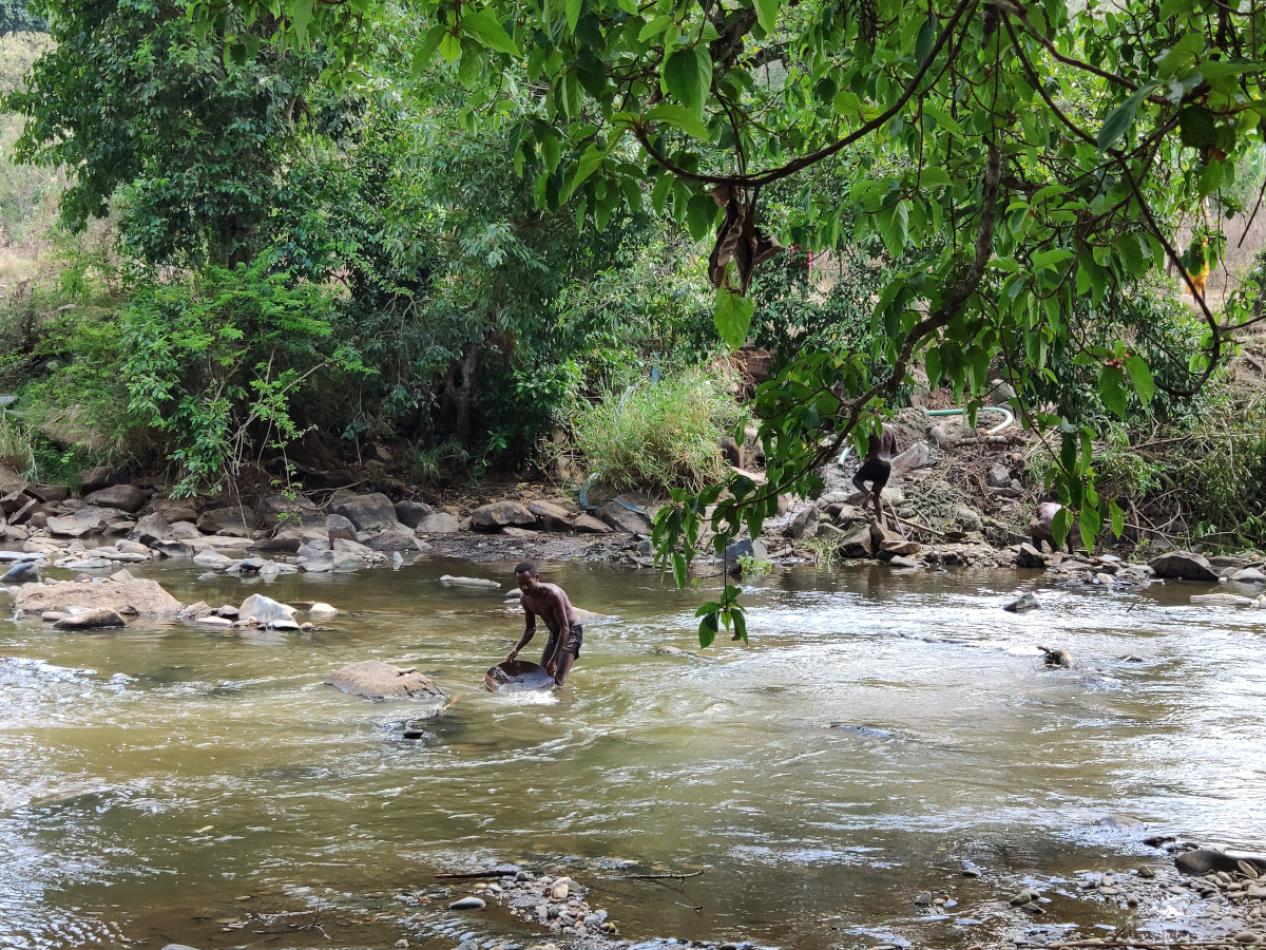
One of the reasons behind the outbreak of the civil war is the hoarding of gold. Thanks to its high value, facility of transport and potential for informal trade, gold has become an essential tool for financing military operations and consolidating the power of the various actors involved in the conflict. According to an estimate by the United Nations Panel of Experts on Sudan, in 2024 the areas controlled by the RSF are thought to have produced around 10 tonnes of gold, worth approximately 860 million dollars.
In this context, the United Arab Emirates (UAE) plays a particularly strategic role. Several reports have documented the economic ties that have developed over the years between the RSF leadership and trade channels leading to the Emirates. The SAF have attempted to reduce their dependence on the UAE – which has been accused of supporting the RSF – by redirecting exports towards Egypt, although a substantial proportion of this gold still ends up in the UAE.
For almost two years, around twenty Italian and Sudanese civil society organisations [ACLI, Amnesty International Italy, ANPI, AOI, ARCI, Baobab Experience, Caritas Italiana, International Committee for Peace in Sudan, Community of Sant’Egidio, Sudanese Community in Italy, Economia Disarmata – Focolare Movement Italy, Emergency, FOCSIV, Fondazione Nigrizia, Médecins Sans Frontières, Comboni Missionaries in Italy, Italian Peace and Disarmament Network, Un Ponte Per, CIPAX] have been working to raise public awareness of the serious humanitarian crisis in Sudan. According to these organisations, shedding light on the legal and illegal gold trade can be a strategy to highlight the international responsibilities fuelling the conflict and to demand that these causes of war be addressed.
With this aim in mind, the seminar ‘Follow the Gold, Disarm the War’ was held in Rome at the General House of the Comboni Missionaries, with the aim of compiling key information on the trade and trafficking of gold from Sudan and pressing for stricter European legislation on the gold market, within the context of the European Regulation on Conflict Minerals (2017).
Cooperation organisation SwissAid highlighted the discrepancy between declarations of gold exports from Sudan and imports into the United Arab Emirates, which points to the enormous scale of smuggling. It is estimated that between 50 and 70 percent of national production evades official channels each year. Another major challenge is the traceability of gold purchased in Switzerland, Italy or the European Union. In 2025, Italy imported 178 tonnes of gold, worth 11.7 billion dollars.
The research centre The Sentry has emphasised the need to strengthen global governance of the gold trade, through common rules for the main trading and refining centres and greater transparency regarding production and trade data. Shared international mechanisms need to be established, modelled on those already in place for other sectors such as oil or diamonds. Furthermore, The Sentry condemns the sports washing strategies through which the UAE bolsters its international image by investing in sports teams and competitions: ‘There is blood on the ball’ is the name of the campaign they have launched.
The self-organised groups concluded the seminar by identifying three main areas for action:
- To exert political influence on European Union decisions and regulations: the aim is, above all, to participate critically in the second review of the European Regulation on Conflict Minerals, highlighting the ethical risks of importing gold from the UAE market;
- To draw the public’s attention to the contradiction inherent in the extraction and trade of such large quantities of gold, for which there is very little genuine need and whose socio-environmental impacts are disastrous;
- To open new channels of dialogue with the Italian government on the urgent need for peace measures in Sudan and for a refusal to cooperate militarily with countries fuelling the war there. Paradoxically, despite two years of protests from civil society, in early June the Senate approved the treaty authorising the sale of arms from Italy to the UAE.
After more than three years of violent conflict in Sudan, against a backdrop of sieges in El Obeid, Kadugli and Dilling – cities under siege and suffering from famine – the associations gathered at the headquarters of the Comboni Missionaries stand as a small sign of resistance and hope alongside Sudan’s long-suffering civil society, the people to whom Saint Daniel Comboni dedicated his life and mission.
Father Dario Bossi, MCCJ