
Daniel Comboni
Comboni Missionaries
Institutional area
Other links
Newsletter
Father Domingues: “Mission is still conceived according to a colonial model”
Quinta-feira, 3 de setembro de 2026
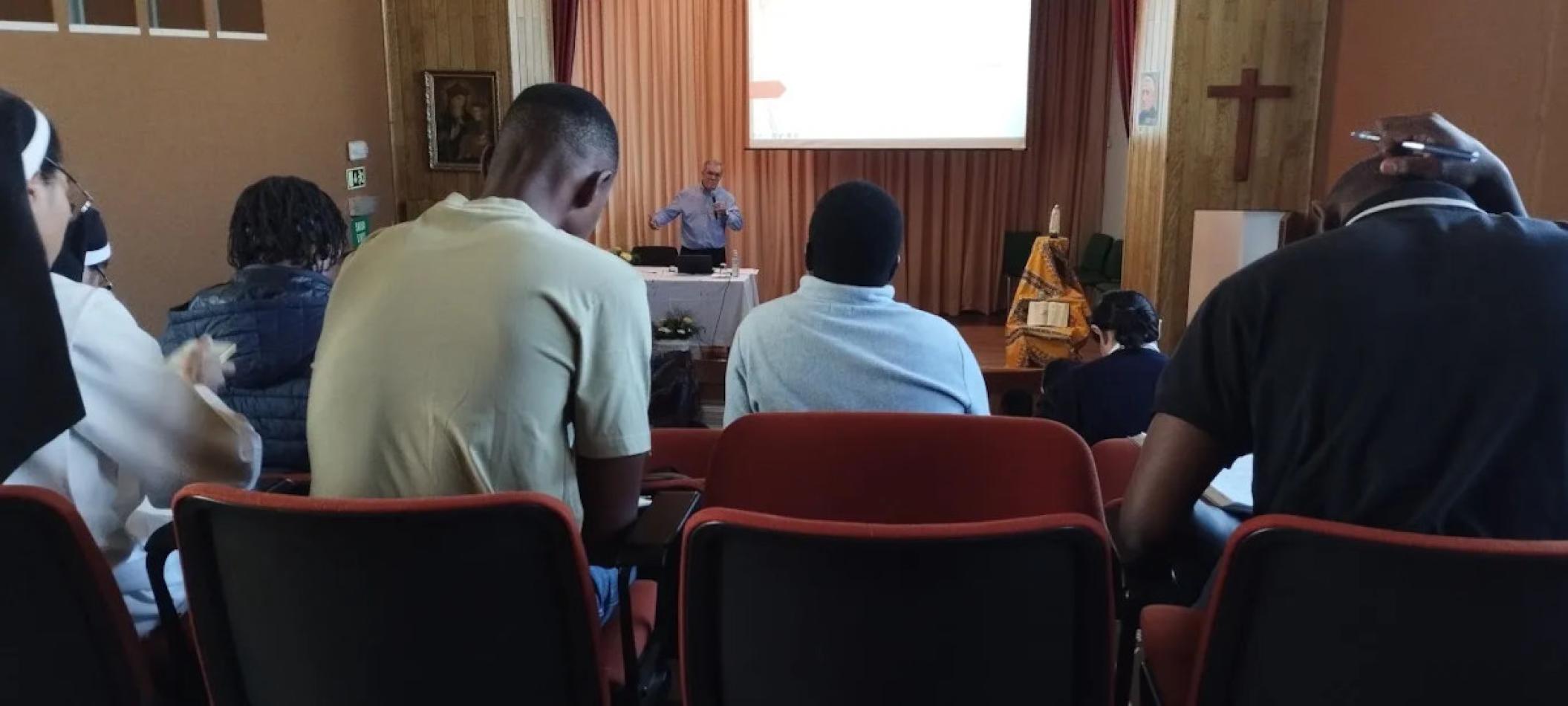
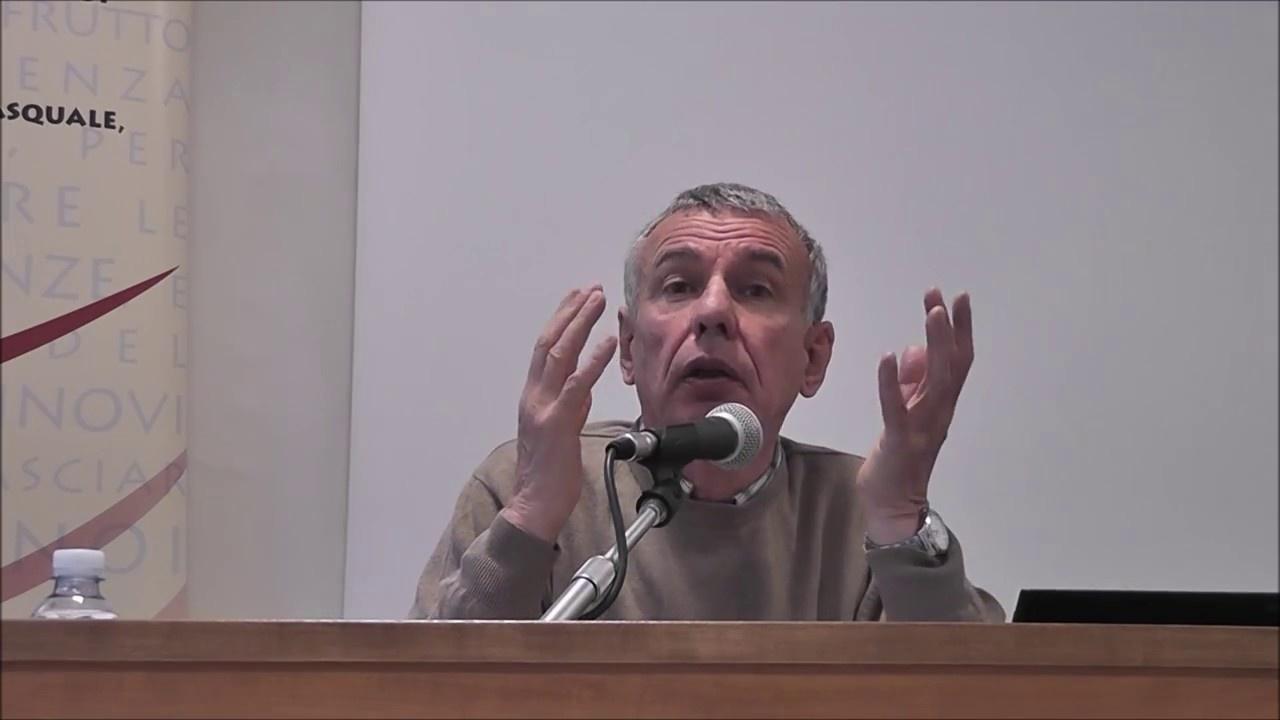
O comboniano padre Fernando Domingues apresentou aos participantes no Curso de Missiologia – que decorreu em Fàtima ma semana passada – o tema «Missão em Portugal, contexto e desafios».
Missionaries from developing countries who work in developed countries tend to create a certain degree of “confusion” within the Christian communities that welcome them, due to the “colonial model of mission, still very much present today”, in which the idea persists that it is the countries of the Global North that support those of the South, explained Father Fernando Domingues.
During a training session dedicated to the context and challenges of mission in Portugal, the former Provincial Superior of the Comboni Missionaries in Portugal revealed that he will soon leave for Mozambique.
His upcoming mission prompted a woman from his hometown — Calvão, in the municipality of Vagos, district of Aveiro — to give him 50 euros so that he could “give it to those poor people over there”.
The religious missionary, who has previously served in the poor neighbourhoods of Nairobi, Kenya, thanked her for the gesture and explained to the course participants what lies behind such an attitude.
“The idea is still present that they have nothing, that they are poor people and have neither culture nor religion. Whereas we have resources, technology, money, culture and religion.”
This view has been at the root of various attitudes: “Mission means taking to them the goods that we have. In the mentality of people here, others were like a kind of ‘empty bag’ that we could fill with the good things we possessed. Mission was seen as a one-way process. From here to there. Taking things, ideas, religion, and so on.”
However, this way of looking at mission continues to be present in “the mentality of people here in our own land” and, perhaps, “also in the mentality of some missionaries, both men and women, even today”. “It is interesting that this mentality continues, in some way, to remain strong among us, even 60 years after the Second Vatican Council,” Father Domingues said.
The missionary stresses that “much good has been done”, but that several questions now arise. “We shared our progress and technology; we took them our customs, our way of life, our culture, our faith, Christian civilisation, our processions and religious traditions. But today, someone begins to ask: what about their cultural and religious traditions? Did they have no value at all? Do they still have value today? Was God not already at work there in their faith? Why should those living in Mozambique or Angola have had to assimilate Portuguese culture?”
Father Domingues adds that today it is important to bear in mind that “the Christian communities of the different Churches can enrich one another and help each other, so that the model of mission is no longer one-directional — mission going from one side to the other — but rather a circular model”.
“All Churches, as they grow and mature, can receive missionaries and send missionaries, so that the experience of one Church enriches the experience of another, and the other Church can enrich us as well. The circular model of mission is what the Church proposes to us today,” he concludes.
Juliana Batista – Fátima Missionária