
Daniel Comboni
Comboni Missionaries
Institutional area
Other links
Newsletter
In Pace Christi
Redaelli Giuseppe
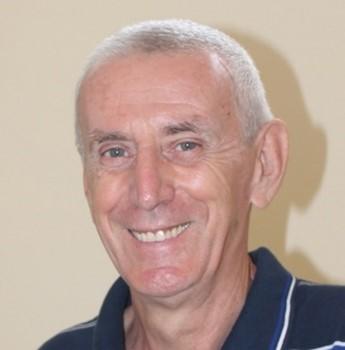
Giuseppe, known to all as "Peppo", was born in Casatenovo in Como Province on 10 March 1948. He attended primary school in the village, then enrolled in the secondary vocational school, where he obtained his diploma in September 1962.
The following year, the family moved to Milan, where a new parish dedicated to the Guardian Angels was being built. Although only fourteen years old, Peppo spent all his free time in the new oratory: for over 15 years he would carry out a real service as an "oratory assistant", not disdaining even act as a sacristan. A "factotum" sacristan, to be honest. In the parish youth group he promoted and organized monthly meetings for the study of the documents of the Second Vatican Council. He attended courses offered by the diocese for the preparation of the Sunday liturgy, becoming a true "expert". And he was always the first to take on the necessary manual work. He soon became known jokingly as “perpetual motion”.
All the youngsters (and their parents) looked to him as a "guide and reference point", because in the oratory he knew how to be a companion for everyone in games, prayer meetings and summer camps.
In 1973, thanks to Peppo's initiative, the parish missionary group was founded with the commitment of a real twinning - which lasted several years - with Father Bruno Maccani, a Comboni missionary in Ethiopia, in the mission of Fullasa, among the ethnic group of the Sidamo. Once he had met Father Bruno, Giuseppe wanted to become a Comboni member too. In 1977 he was in Venegono for a GIM meeting. He was enthusiastic about the GIM and never missed a single meeting for a whole year. In June 1979, he began the novitiate in Venegono.
At the end of this second stage of the formation course, the opinion is flattering: «He has a mature personality. He is sensitive to people. It enjoys a transparent character. He carries out his commitments with a great sense of responsibility... He is eager to live and bear witness to his faith with joy... His need to keep up to date on the problems of the mission is strong and he does not miss the opportunity to learn more about the "specific mission of the Brother” and on his particular working style. His practical sense, his amazing ability to learn and his past experiences allow him to be versatile in his performances."
On 6 June 1981, he made his first religious profession. In July he went to Elstree, England, to study English, which he learned well and quickly. In June 1982 he gained an English language certificate at the University of Cambridge. In the meantime, he continued his carpentry and mechanics courses at a technical institute. He was now ready for the scholasticate.
In August 1982 he was at the International Brothers' Centre, recently opened in Gilgil, Kenya. He threw himself into studying Kiswahili, so as not to have to limit himself to the specialization courses offered at the Village Polytechnic, held in English. He also wanted to go to the villages, meet people, and participate in the life of the Christian communities, and he wants to know the language that everyone speaks.
When he was asked to express his option for the future mission field, he chose South Sudan and was assigned there from 1 January 1984. For the ceremony of his perpetual vows, the community of Juba opted for the Feast of the Sacred Heart, on May 26, 1987.
In July 1988, Brother Peppo was assigned to the community of Wau, as bursar of the community and of the various health and educational institutions present in the vast parish. In a short time, he settled with admirable dedication into the various jobs entrusted to him also by the diocese: director of the Development Office, assistant in the diocesan administration and manager of the workshops scattered in the various missions. On 1 January 1990 he was elected provincial councillor; he would be re-elected in 1993.
In September 1991, he was in Rome for the General Chapter, as a representative of the brothers of his macro-region. He listened to talk that worried him somewhat and there was talk of his return to his home province. In fact, in March 1992, Father David Glenday, the new superior general, sent Brother Giuseppe an official letter in which he assigned him to the Province of Italy from 1 July 1992.
In July 1992, Brother Giuseppe was already in Verona, ready to take over from Brother Bruno Guardini. He soon settled into the new job. He had his own way of doing things, but the procurator’s services showed no signs of diminishing; on the contrary... The confreres of the Mother House welcomed him with open arms and it didn't take them long to discover the qualities of the new arrival.
Often, during the weekends, Brother Giuseppe escaped to Milan to visit his sisters and spend some time in the parish. There he would speak and share information on the situation in Sudan. He met the missionary group to which he always presented new small projects to sponsor. And for their beloved "perpetual motion", all parishioners were ready to go into action. On Mondays, as always, he would send a message to the brothers in Wau with the notification: «Project accepted and approved. Get started. Funds ensured".
In January 1996, Brother Giuseppe was elected a provincial councillor. He would remain so until October 1999, when he also leaves the office of provincial procurator to go to Germiston, in South Africa, to participate in the Comboni Year of Ongoing Formation, until June 2000. It was while he was in Germiston that, in March 2000, he received a letter from the Superior General, Father Manuel Augusto Ferreira, assigning him to the province of Khartoum starting from 1 July of the same year.
From Germiston he went directly to the Sudanese capital, where he was welcomed at the Comboni College to study Arabic: he learned enough to enable him to communicate (he would continue to study Arabic and achieved a fairly good standard). His reputation as a good administrator also preceded him in Khartoum. Already in April 2001, the bishop wanted him as a member of the diocesan finance control commission. In July 2001, the provincial council appointed him bursar and provincial procurator, and he moved to the provincial house. In March 2003, the Superior General appointed him a member of the General Council for the Economy, for Anglophone Africa and Mozambique.
For a good eight years, Brother Giuseppe managed the difficult task of maintaining relations between the various Comboni communities operating in the vast territory, of following their projects and dealing with the movements of the missionaries and their relationships with the local authorities and with various humanitarian organizations, apart from those that were religious.
In November 2008, the Khartoum provincial council assigned him to the parish of Wau as the local bursar, but Bishop Rudolf Deng Majak immediately requested him as diocesan administrator. In December 2010, the provincial council accepted the request of the bishop of Wau to extend the service that Brother Giuseppe was providing to the diocese for another two years. On July 1, 2011, he was reconfirmed administrator of the diocese of Wau until December 31, 2013.
On 1 January 2014, he was called to Juba, the capital of the new state, to the Comboni House, which served as the provincial headquarters, as bursar and provincial procurator, a service he held in an excellent manner until the end of 2020. In June 2022, he was again appointed as a member of the General Financial Council for Anglophone Africa and Mozambique. In July, the archbishop of Juba asked him to become a member of the financial council of the diocese.
In January 2024, Brother Giuseppe did not feel well. The bishop and his confreres invited him to slow down the pace of the work. He promised to do so but … On April 23, he complained of feeling unwell. The superior of the community, Father Gilingere Limingere Lwanga, took him to the hospital. He had a high fever. He was tested for malaria with a positive result. He was given antimalarials but the fever shows no signs of abating. Two days later, he went into a coma and, on the morning of the 24th, around 5.20 am, he died.
The funeral was celebrated on 27 April at the Cathedral of Wau, presided over by Msgr. Matthew Remijio Adam Gbitiku. After the service, the diocesan radio-web called the city population to gather at the cemetery in the Lokoloko district, where the remains were buried next to the tombs of numerous Comboni missionaries who died in the diocese of Wau.
On May 26, the “month’s mind” Mass was celebrated in the Milanese parish of the Guardian Angels, presided over by Father Fabio Baldan, provincial superior of Italy.