
Daniel Comboni
Comboni Missionaries
Institutional area
Other links
Newsletter
4.2. Dialogue and inculturation in Comboni mission in the Chinese world
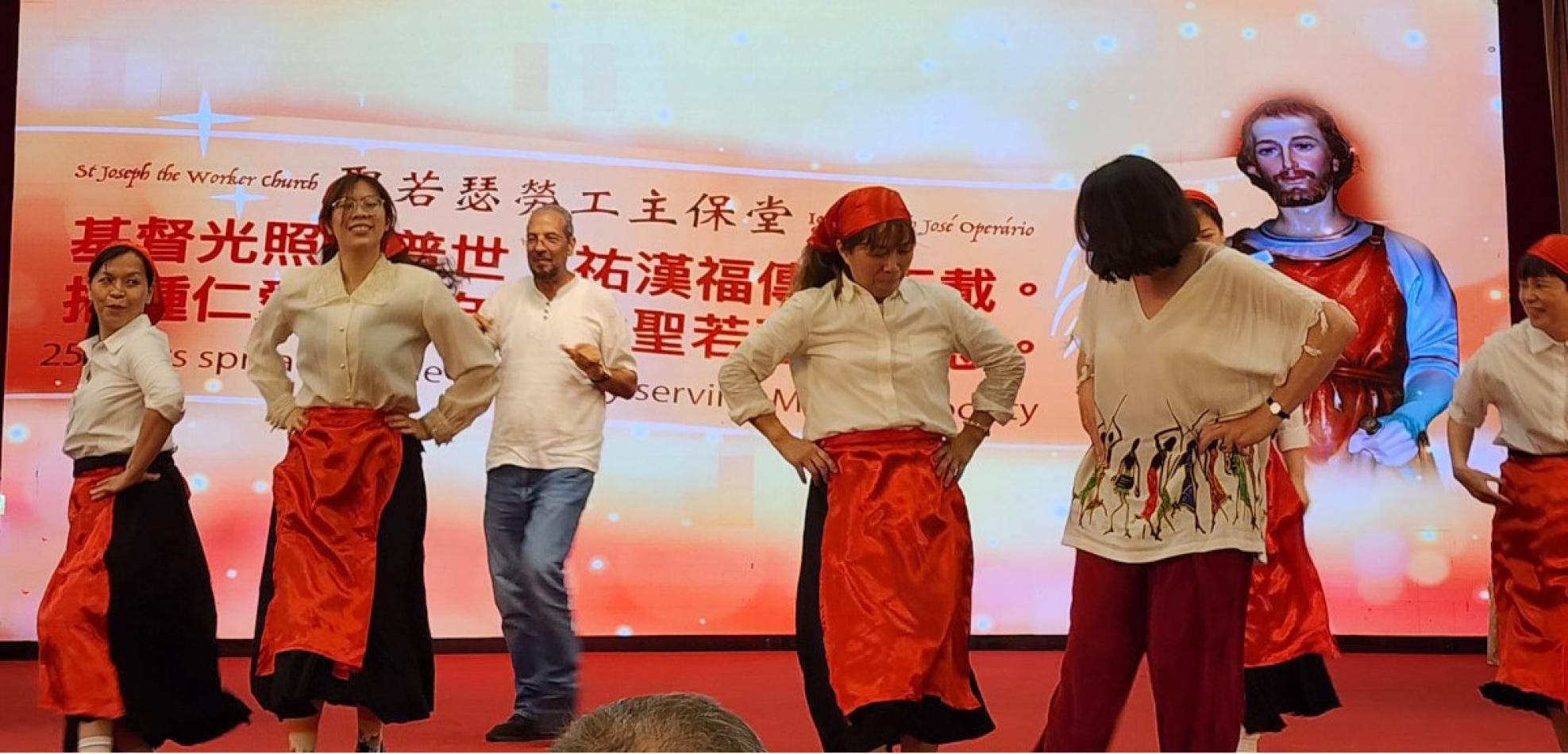
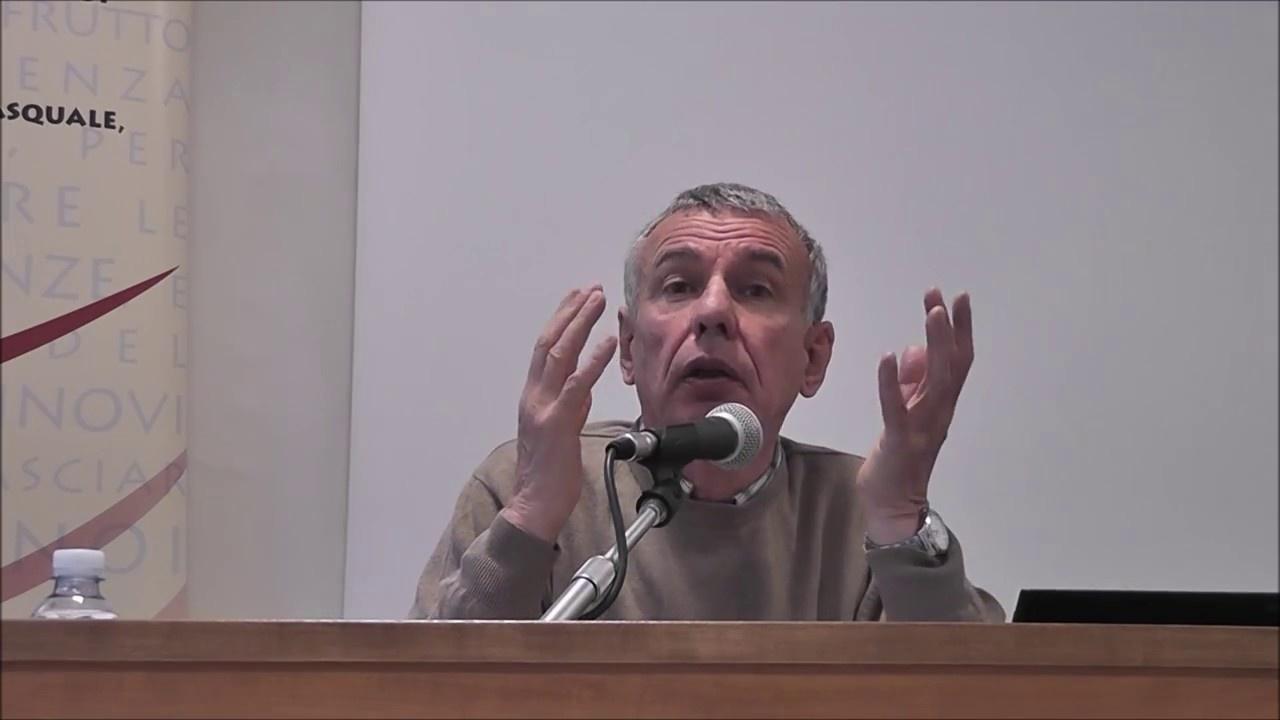
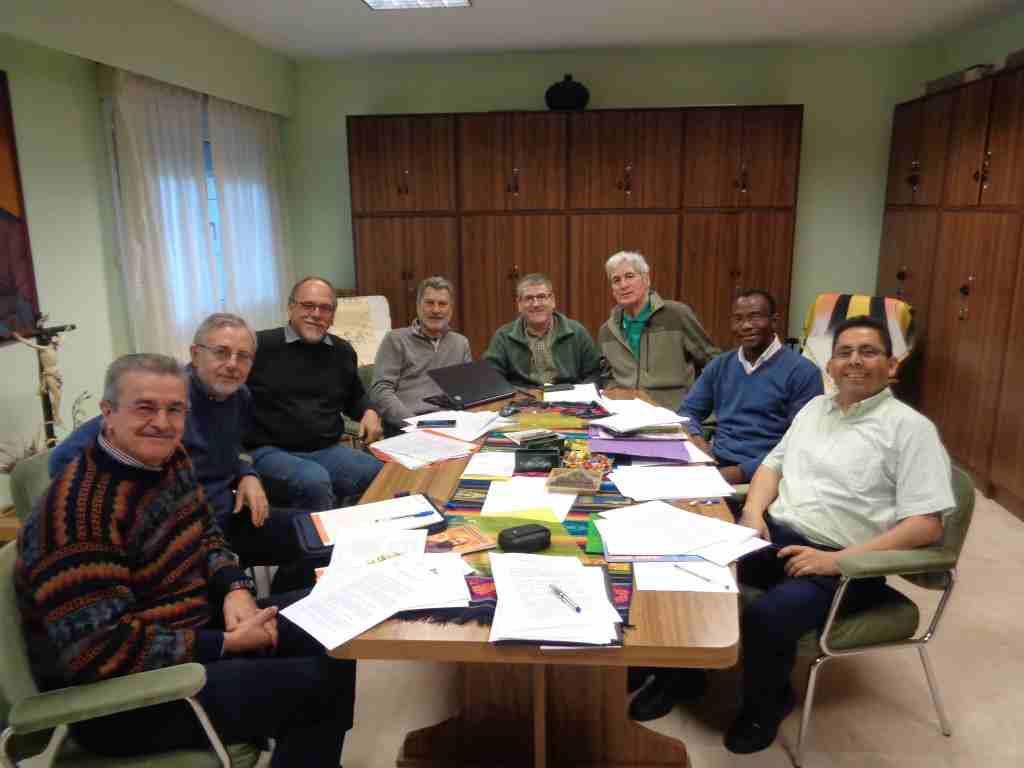
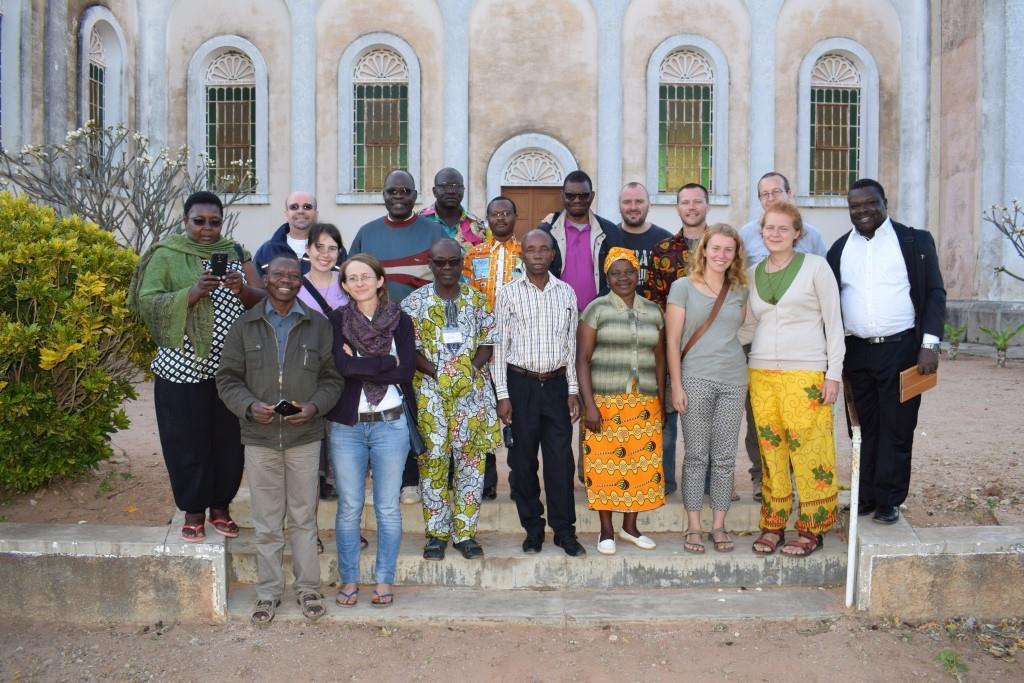
This contribution aims to reflect on the relationship between dialogue and inculturation in the Comboni mission within the Chinese world, placing this experience in the broader horizon of the Church's mission in Asia. Drawing from the perspective of the "triple dialogue" proposed by the Federation of Asian Bishops' Conferences, the text highlights how the encounter with cultures, religions, and the poor does not represent a secondary aspect of evangelization, but rather constitutes an essential criterion of it. In the Chinese context, the Comboni presence developed in necessarily limited forms, often itinerant, and always in close relationship with the local Churches, thus developing a particular attention to listening, gradualness, and respect for the local ecclesial and cultural dynamics.
The missionary experience in the Chinese world has demonstrated, on the one hand, the value of the lengthy process of learning the language, symbolic codes, and social forms specific to Chinese culture; on the other hand, it has highlighted the limitations of a classic model of inculturation, which tends to move primarily in a unilateral "faith-culture" direction. Instead, the category of interculturality appears more adequate, understood as a reciprocal process of interpretation, comparison, and transformation, in which faiths and cultures do not remain static and separate realities, but meet and mutually enrich one another. From this perspective, interreligious dialogue and reflection on universal values do not emerge as mere pastoral strategies, but rather as concrete forms of relationship, discernment, and shared responsibility, capable of safeguarding together the universality of the Gospel and the plurality of cultures.
SUMMARY
Starting from the perspective of the “triple dialogue” proposed by the Federation of Asian Bishops’ Conferences, for decades the Church has emphasized that the encounter with cultures, with religions, and with the poor does not represent a secondary aspect of evangelization, but constitutes an essential criterion of it. The truth of the Gospel grows within the concrete history of people and communities, taking on different forms depending on the contexts in which it is received.
Within this perspective, the Comboni presence in the Chinese world developed in necessarily small and itinerant forms, but for this very reason, it had to be particularly attentive to listening to real needs and dependent on collaboration with the local population. In mainland China, Macao, and Taiwan, Comboni missionaries operated in a context marked by strong political, social, and religious differences, but always in relationship with the local Churches and with deep respect for their points of view. The difficulties posed by governmental restrictions made the importance of a discreet missionary style based on sharing even more evident.
In this sense, the Comboni experience fits ideally into the path traced by great missionaries who, like Matteo Ricci, sought to express the Christian faith through categories understandable to the Chinese. A decisive step in this experience is represented by learning the local language and customs. Mission, from this perspective, implies an exercise in humility that can take on kenotic traits: the missionary renounces being the protagonist, accepts the long time required for formation, and allows themselves to be progressively introduced into the symbolic and relational world of the other. This process, often marked by hardship and humiliation, is nevertheless indispensable for genuine inculturation. The Christian faith, in fact, is not communicated in an abstract way, but through concrete historical and cultural mediations. Grace does not destroy culture; rather, it assumes, purifies, and brings it to fulfilment.
However, the paradigm of inculturation also presents certain limitations. It tends to describe the relationship between faith and culture as a predominantly unidirectional movement, from the faith toward the context in which it is proclaimed. In reality, Christianity has always lived off reciprocal exchanges between different cultures, and its transmission has involved continuous transformations, reinterpretations, and purifications. For this reason, the category of interculturality is more adequate, as it recognizes the dynamic character of cultures and their mutual capacity to enrich one another. Cultures are not static containers, but living historical realities that meet, interpret, and mutually modify one another. In this perspective, even the Gospel does not appear as a message to be transplanted into pre-given forms, but as a truth that takes shape through concrete encounters with peoples and their traditions.
Interculturality concerns not only the anthropological and social dimensions, but also the spiritual and religious ones. The deep connection between culture and worship shows that every civilization has developed around a religious vision of reality, capable of shaping values, symbols, and relationships. For this reason, interreligious dialogue constitutes an essential aspect of mission in Asia. It does not consist of a simple strategy for coexistence, but of a respectful confrontation between different spiritual experiences, oriented toward the search for truth, human dignity, and the common good. The relationship with the other, on a religious level, does not impoverish the Christian faith, but purifies it and disposes it to a deeper witness.
A further central knot is the comparison between different cultural visions, particularly between the West and China. Certain values that are often taken for granted in a Western context—such as individual rights, freedom of expression, and democracy—are not received in the same way within the Chinese tradition. This does not mean they are incompatible worlds, but rather that each has developed different categories for understanding the person, society, and the common good. The Western tradition often emphasizes the centrality of the individual and the distinction between subject and society; the Chinese tradition, on the other hand, attaches great importance to harmony, relationships, and community order. The symbol of yin-yang well expresses this vision, in which opposites do not eliminate each other but integrate.
In this framework, speaking of universal values requires caution and depth. Universality cannot be reduced to an abstract universalism that imposes a particular vision on everyone, nor can it dissolve into a relativism that makes every encounter impossible. Fundamental values, such as human dignity and religious freedom, are truly universal only if they are recognized and lived within different historical and cultural contexts.
A final decisive issue concerns "sinicization". This term, which originally designated the process of assimilating external elements into Chinese civilization, is today used by authorities as a tool of political control over religions. In this perspective, permitted religious denominations must conform to the principles of socialist society and support the leadership of the Party, including through the adaptation of their liturgical, institutional, and doctrinal forms. This is a use of culture not as a space for expressing differences, but as a means of standardization and dominance.
The Comboni presence in China, although numerically limited but international, testifies to the possibility of a real encounter between the universal Church and a profoundly different civilization, while respecting identities and seeking a broader communion. In this perspective, the "gap" between cultures should not be feared as a dividing distance, but welcomed as a fertile space in which a deeper understanding of humanity and the Gospel can emerge.
DIALOGUE AND INCULTURATION IN COMBONI MISSION IN THE CHINESE WORLD
“The truth of the Gospel is not imposed from above, but grows over time, within the concrete interweaving of lives, communities and cultures. It is a truth that is not afraid of diversity, but welcomes it and brings it into harmony; that does not eliminate conflicts, but transfigures them; that brings back together what history tends to disperse. Hence also the image of the polyhedron, a figure with many faces, in which the same truth of the Gospel is reflected from different angles.” (Magnifica Humanitas 25, which draws on Evangelii Gaudium 236 and Fratelli Tutti 215).
Introduction
The Federation of Asian Bishops’ Conferences (FABC), since the 1970s, has identified three inseparable paths for the mission of the Church on that continent: dialogue with cultures, dialogue with religions, and dialogue with the poor. This threefold dialogue must not remain at a theoretical level, but become a dialogue of life, action and sharing of religious experiences, oriented toward building harmony in society, a concept dear to many Asian peoples. The Comboni missionary experience in the Chinese world confirms how relevant these indications still are.
The small Comboni presence in Asia has developed in different contexts, from Southeast Asia, with a large Catholic presence (in the Philippines since 1988) or a growing one (in Vietnam since 2012), to the multifaceted Chinese world, where Catholics are a very small minority: in Macau (since 1992), a former Portuguese colony returned to China in 1999 and for centuries a bridge between East and West; in Taiwan (since 1997), a multicultural island with a turbulent but stable democracy (this year, however, the Comboni community on the island was suspended); and finally, in mainland China, where our presence has been itinerant and is now very limited by the recent tightening of the Government’s religious policies.
I must emphasize that, given the restrictions on our missionary presence in China, and given the priority placed on supporting the local Church, which often suffers, we have not had many resources to invest specifically in dialogue with other religions, and therefore most of our interlocutors have been Christians. Consequently, our group has not explored many of the characteristic themes of interreligious debate in the Asian world, such as the question of the uniqueness and universal salvific significance of Christ.
The great missionaries who worked in China — from the Syriac monks (the so-called Nestorians) of the seventh century to the wave of Jesuits from the sixteenth century onward, with Matteo Ricci as the best-known example — did enormous work to translate the Christian faith into categories understandable to the Chinese. They used not only Chinese language, culture and spirituality, but also their scientific and technological knowledge as tools of evangelization. They left a legacy that still inspires and encourages us today.
The delicate transition from inculturation to interculturality
Comboni dialogue with the Chinese world began with listening, during the long period of learning the language and local customs. It was an intense but passionate effort, in which we experienced the “kenotic” dimension of inculturation, which requires humility and often even humiliation. I remember that the basic course for learning Chinese lasts at least a couple of years, followed by a long period of gradual insertion into pastoral ministry. The “decolonization of attitudes,” indispensable for genuine inculturation, thus began with this patient learning process, which entails giving up protagonism and recognizing the cultural and spiritual greatness of our Chinese interlocutors. Moreover, these long stages are necessary because, as Pope Francis wrote in Evangelii Gaudium (115), “grace supposes culture”: the grace that comes from faith does not destroy what is human, does not erase the history, language, symbols or mental categories of a people, but takes them up, purifies them and brings them to fulfillment. Every missionary must therefore take the time necessary to immerse himself in all these dimensions of a people’s life.
However, the classical model of inculturation presents some critical issues. As we know, it is inspired by the mystery of the Incarnation: just as Jesus became human within a people with a specific history, so faith should become incarnate in different cultures. The comparison, however, holds only to a certain point, because there is no “pure” form of faith to be incarnated, separated from a culture. From its origins, Christianity has been expressed through conceptual and linguistic instruments provided by different cultures. History teaches that the transmission of faith always involves an encounter between one or more cultures that convey the Christian faith and another culture, and entails continuous stages of purification and transformation, since the revealed message is not identified with any culture and possesses a transcultural content (Evangelii Gaudium 116).
The influence of “vehicular cultures” has been evident in our Comboni group: those of our lands of origin, those of the peoples who colonized parts of China, and those of the processes of globalization that have influenced Asia in recent decades. Our international character has clearly been an essentially positive element in awakening interest in the Gospel. Even the motivations of the catechumens whom we have accompanied with great commitment over the years reveal this complex cultural interaction: beyond the decisive encounter with local Christians, many also approached the faith through international cinema and literature, others through European art, architecture and music encountered in their studies or travels, and still others through education received in institutions run by international congregations.
Another limitation of classical inculturation is that it highlights above all the movement from faith to culture, and not the reverse. For example, the Chinese people’s resistance to colonial cultural influence, which has been a constant throughout their history, led to the first ordinations of Chinese bishops in 1926, which marked a decisive turning point in the process of promoting local Churches, anticipating ecclesiological orientations that would later be fully formulated by the Second Vatican Council.
It is therefore no coincidence that all the Comboni initiatives in the Chinese world have been initiated and carried forward in constant dialogue with the local Churches, placing their needs first and always remaining in a supportive position. The choice to carry out mission in an itinerant style within mainland China, without our own structures, also follows this approach. We have had to rely — literally — on local people, both to determine the real needs to be addressed and to face the challenges caused by government restrictions.
In other words, cultures are not simply a covering for the Gospel, but one of the hermeneutical keys to understanding it (and this also applies to the interpretation of the Bible). For this reason, interculturality is a more appropriate concept than inculturation: faiths and cultures are not static blocks, but encounter and influence one another.
Interculturality and Religion
The common etymological origin of the words culture and worship, from the Latin colere (“to cultivate,” “to care for”), reveals the profound link between the cultural and religious dimensions. Every culture was born and developed around a religious vision of reality, which shaped its values, symbols and forms of social coexistence.
Interculturation concerns not only the anthropological and social dimension, but also the spiritual one. Interreligious dialogue, a respectful encounter between different spiritual experiences in the search for truth, human dignity and the common good, is an integral part of this process.
On a personal level, the method of mantra meditation, common to many religious traditions but greatly developed in Hinduism and Buddhism, has profoundly influenced my spirituality and my way of praying. From silent meditation emerges the strength of compassion, which is also necessary for healing human wounds and becoming agents of peace in the world, a peace that must begin first of all in the depths of each person’s heart.
The encounter between different spiritualities frees dialogue from the narrow sphere of being merely a “strategy of evangelization” and turns it into a true “act of care” toward ourselves (each of us needs to grow inwardly!), toward the peoples to whom we are sent, and also toward the poor so that, as the encyclical Dilexi Te explains, they themselves may become subjects capable of creating their own culture, rather than objects of charity: “Marginalized communities have the right to live the Gospel and to celebrate and communicate the faith according to the values present in their cultures. The experience of poverty gives them the capacity to recognize aspects of reality that others are unable to see, and for this reason society needs to listen to them. The same applies to the Church, which must positively value their ‘popular’ way of living the faith... the worst discrimination suffered by the poor is the lack of spiritual attention. The preferential option for the poor must be translated above all into privileged and priority religious attention” (DT 110; 114).
In the liturgy, understanding the cultural background is essential in order not to judge superficially the ritual expressions of Chinese people (Catholics or followers of other religions), which to an outside observer may appear too formal and rigid. In China, in fact, great attention is paid to correct outward practice, where ritual has the power to order the community and shape the believer’s inner disposition. For a Chinese believer, outward behavior — expressed through precise gestures — is not empty formalism, but already the very manifestation of faith, the concrete instrument through which the sacred takes shape and inner harmony is generated and preserved.
Values in Dialogue
One of the main problems for missionaries in China is recognizing that some values which the West has always taken for granted, such as “personal rights,” “democracy,” and “freedom of expression,” are not understood in the same way in Chinese culture. It is not a matter of opposing two incompatible worlds, but of recognizing that both traditions have developed different ways of understanding the concepts of person, society and the common good.
A first difference concerns the relationship between dualism and harmony. Western thought tends to interpret reality through dualistic categories, whereas the Chinese tradition, especially through Taoism and Confucianism, gives priority to the search for harmony among different elements. The yin-yang symbol expresses this perspective: opposites do not exclude one another, but complement each other.
A second difference concerns the relationship between authority and freedom. Modern Western culture has placed individual freedom at the center, whereas the Chinese tradition has attached greater importance to authority as a guarantee of social order. In Confucian thought, good government depends on the moral virtue of those who govern and on the reciprocal sense of responsibility between rulers and those who are governed.
Finally, a significant difference concerns the relationship between the individual and the collective. Western culture tends to regard the person as an autonomous subject, whereas in Chinese culture personal identity is constructed primarily through family, social relationships and responsibility toward the group.
These differences should not be interpreted as absolute oppositions. The West also recognizes the value of solidarity and the common good, just as Chinese culture recognizes human dignity and the importance of fundamental freedoms, although it interprets them according to its own categories. Interculturality brings these perspectives into dialogue, believing in the possibility of mutual growth in our respective conceptions in order to arrive at a fuller understanding of our common human nature, in which faith can then take root and bear fruit.
Is it possible to speak of universal values?
The Comboni project Fen Xiang (“Sharing”) in Asia, created as a means of helping the Church in China and promoting its missionary spirit, has sought to embrace this diversity in its ministry, serving all the different parts of the Chinese Church (registered/patriotic and underground), working for the good of the whole Chinese Church which, as all recent popes have emphasized, is and must remain one. It is not always easy, especially in this period of severe restrictions, but the patience to wait is also part of the process of respectful dialogue. As foreign missionaries, we have often asked ourselves how to speak of universal values in the face of a culture so deeply rooted in its own identity.
The Chinese government has always advocated an application of international law and human rights consistent with the so-called “Chinese characteristics,” asserting a legal and political model rooted in its own history, culture and social reality.
Christianity, on the other hand, has always defended the universality of the fundamental values that derive from the Gospel: “An infinite dignity, inalienably grounded in his or her very being, belongs to each human person, beyond every circumstance and in whatever state or situation the person may be.” (Dignitas Infinita 1) These rights are based on the natural law inscribed in the human heart and present in different cultures and civilizations. Naturally, human rights must also include the right to religious freedom, which in recent years has faced considerable restrictions in mainland China.
It is evident that a long process of dialogue, at both cultural and religious levels, is needed so that universal values can be recognized as such and effectively applied in different contexts. Interculturality is in fact the tool that makes it possible to overcome both abstract universalism, which imposes one particular vision as valid for everyone, and relativism, which makes every encounter impossible; it teaches us that universal values acquire real meaning only when they are interpreted and lived concretely in different historical and cultural contexts.
I believe that our small international Comboni community among the Chinese people has been a testimony to the universality of the Gospel and to the possibility of each person, regardless of cultural background, having a personal encounter with the Risen Christ. From this encounter arises true respect for every person, including those who have remained on the margins of China’s great economic development and who have been a privileged focus of our pastoral action in China, supporting the social works of the various dioceses in which we have worked.
Sinicization: Culture as a Political Instrument
In the debate on religious policies in China, the term “sinicization” has become central. It is often associated with the concept of inculturation, but the two terms are not synonymous. In the past, the word “sinicization” was used to indicate the process through which foreign elements were progressively assimilated into Chinese civilization. In recent years, however, the Chinese government has made the “sinicization of religions” one of the pillars of the State’s political control over them.
According to this approach, the religions permitted by the Government — Buddhism, Taoism, Islam, Protestantism and Catholicism — must adapt to the principles of socialist society, support the leadership of the Communist Party and contribute to the realization of the “great rejuvenation of the Chinese nation.”
Contemporary sinicization does not concern only outward aspects, such as the Chinese language or local elements in liturgy and sacred art. It is a politically guided process that also affects the formation of clergy, the administration of religious communities, the education of believers and the interpretation of religious doctrines.
As a consequence, instead of promoting cultural particularities, sinicization uses culture as a pretext for dominating differences. The recent Chinese law on the promotion of ethnic unity, which entered into force on 1 July 2026, aims to consolidate a single national identity through strong cultural assimilation guided by the Communist Party. The law imposes the use of the national language, Mandarin, in schools and institutions at the expense of local dialects, limits the autonomy of ethnic and religious minorities, such as Uyghurs and Tibetans, and strengthens state control over local cultural practices and their religious expressions (it even regulates the external appearance of places of worship). We must always be aware that politics will always seek to use culture to achieve its goals of power.
In this regard, the love that the Chinese Church has always had for the Holy Father as the successor of Peter (and consequently, love for the “Roman” liturgy), even during the harshest periods of persecution, in opposition to the pressure of the Party aimed at creating a Chinese Church independent of the Vatican and managed by the government, is not simply religious traditionalism, but an expression of the freedom of conscience of the Chinese Church, which seeks to resist every political instrumentalization of faith and rejects the idolatrous worship of the State.
Conclusion: Beyond Cultural Identities
The sinologist François Jullien, in his book Cultural Identity Does Not Exist, challenges the idea that cultures are closed and immutable realities. As we have said, they are instead living, historical and dynamic realities, born from encounters, exchanges and mutual transformations.
At the heart of his thought is the concept of “écart,” which is not a distance that separates, but a fruitful space that connects two different ways of understanding reality. The écart does not eliminate difference or turn it into opposition; rather, it makes it possible to see what remains hidden when each person remains enclosed within their own cultural frameworks. Encountering the other helps each culture recognize its limits and open itself to new possibilities.
The difference between a more Western view of the autonomous individual and a more Chinese view of the person embedded in a network of relationships should not lead to opposition, but should open up questions that we must try to answer together: how can freedom and responsibility be reconciled? How can we defend human dignity without ignoring the common good? How can we promote universal values without turning them into cultural imposition?
Universality arises from sincere dialogue on these questions, and the écart perceived in answering them can become a “creative distance,” a space in which the other is not an obstacle, but instead offers the possibility of understanding ourselves more deeply and of understanding what constitutes the human.
From this perspective, I like to think of the small Comboni mission in the Chinese world as a place where the “écart” has helped create small spaces of dialogue and communion: among the different parts of the Chinese Church and between the Chinese Church and the universal Church. The friendships we have built with so many people and communities in the Chinese world over these years, which have endured despite the difficulties caused by the lack of freedom and by distance, encourage us to continue our mission of dialogue with cultures, religions and the poor for mutual growth as people, as Christians and as missionaries.
Paolo Consonni, MCCJ
QUESTIONS FOR REFLECTION
-
How have you experienced, personally and communally, the positive and negative influence of the “vehicular cultures” through which you have transmitted your faith to others in your missionary life?
-
How has your understanding of faith grown through encountering cultures/religions different from your own?
-
How have you managed the tension/encounter between the universality of the essential values of the Gospel and the uniqueness of the cultural values of the peoples among whom you have carried out your missionary life?
-
Dialogue with cultures, religions and the poor: how do you cultivate it both intellectually and relationally?
Further Reading
-
Alessandra Chiricosta, Human Rights Examined through Interculturality. https://www.academia.edu/16534890/Filosofia_Interculturale_e_Valori_Asiatici_I_Diritti_Umani_al_vaglio_dellinterculturalita?sm=b&rhid=41532409420
-
Enrico Riparelli, From Inculturation to Interculturality. I. Value and Limits of the Category of Inculturation. https://www.academia.edu/47988377/Dalla_inculturazione_alla_interculturalit%C3%A0_I_Valore_e_limiti_della_categoria_di_inculturazione
-
Bernardus A. Rukiyanto, S.J., Interculturation as Threefold Dialogue: Learning Experience from the Church in Asia. https://www.academia.edu/39132759/Interculturation_as_Threefold_Dialogue_Leaming_Experience_from_the_Church_in_Asia?sm=b&rhid=41532491985
-
Edmund Kee-Fook Chia, Asian Christianity and Theology. Inculturation, Interreligious Dialogue, Integral Liberation, Routledge (London and NY), 2021.
-
Jullien François, Cultural Identity Does Not Exist, Einaudi (Turin), 2018.
4.2. Diálogo e inculturação na missão comboniana no mundo chinês_PT
4.2. Diálogo e inculturación en la misión comboniana en el mundo chino_ES
4.2. Dialogue et inculturation dans la mission combonienne dans le monde chinois_FR
4.2. Dialogo e inculturazione nella missione comboniana nel mondo cinese_IT
4.2. Dialogue and Inculturation in Comboni Mission in the Chinese World_EN